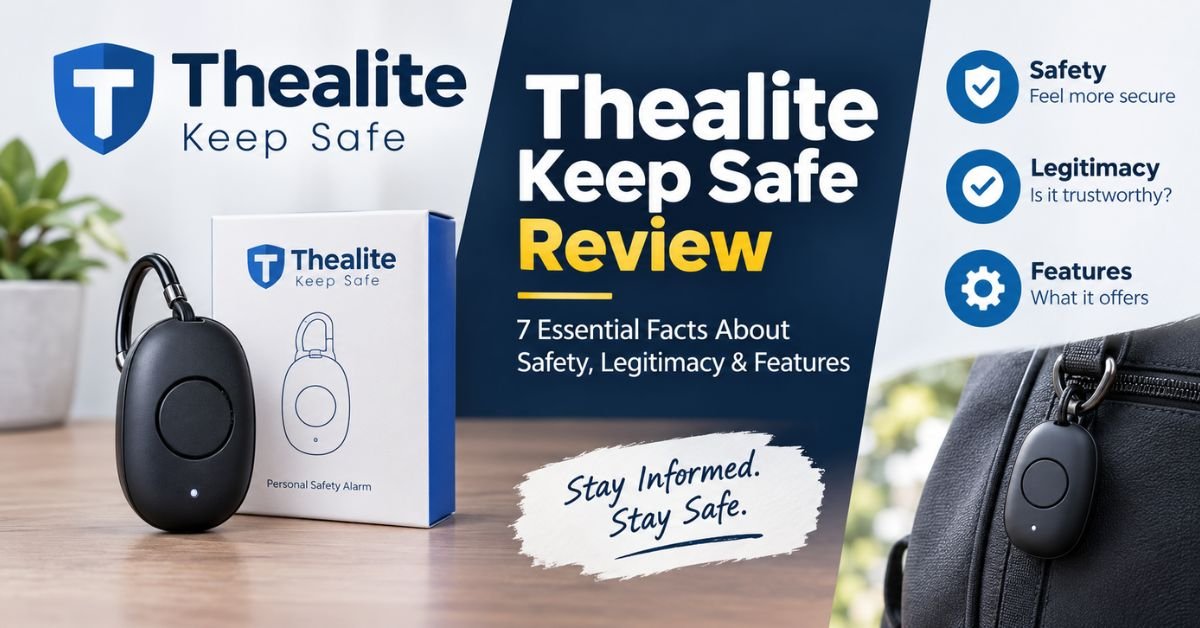
Thealite Keep Safe Review: 7 Essential Facts About Safety, Legitimacy & Features
You type an unfamiliar web address into Google. A name like thealitekeepsafe.com shows up. You pause and wonder whether it deserves your time. This Thealite Keep Safe review answers that question in plain words. You’ll learn what the site is, how it works, and whether it passes a basic website legitimacy check.
Along the way you’ll meet seven key facts. The site is a broad content hub. Its name promises more safety focus than its pages deliver. It looks safe to browse with normal care. It isn’t a dedicated security resource. Article quality varies. Its wide scope helps discovery but weakens focus. It also appears open to contributors.
| # | Key Fact | What It Means for You |
| 1 | Broad content hub | Expect many topics, not one specialty |
| 2 | Name versus scope | The brand sounds narrower than the content |
| 3 | Safe with normal caution | Browse like you would on any website |
| 4 | Not a cybersecurity specialist | Use official security sources for serious issues |
| 5 | Uneven article depth | Check every article before you trust it |
| 6 | Wide scope cuts both ways | Easy discovery but diluted authority |
| 7 | Open to contributors | Disclosure and editorial rules matter |
Quick Overview of Thealite Keep Safe
Short answer first. Thealitekeepsafe.com is an informational website. It covers technology, artificial intelligence, business, finance, SEO, health, education, and home security. The verdict from this Thealitekeepsafe.com review is simple. The site looks safe to browse when you follow normal habits. Treat it as a general magazine, not a security authority. That one sentence sums up the Thealitekeepsafe.com website overview.
Read More: 150: FundFireInsight.com Review: Features, Safety, and Legitimacy Explained
Think of the site like a big public library with a safety sign on the front door. You can wander in and find plenty to read. Some shelves hold sturdy, careful work. Others hold lighter material. The seven facts above work as your map. The sections below fill in each one with examples, tables, and checks you can run yourself.
What Is Thealite Keep Safe?
Curious about the basics? Here they are. The Thealite Keep Safe website is a content hub built from long-form guides and articles. Visitors mostly arrive through search engines. They type a narrow question and land on one page. From there they can browse related posts. This answers the common question of what Thealite Keep Safe is and what information Thealitekeepsafe.com provides. It provides general explainers across several everyday subjects.
Here’s the twist. The site began with a safety angle. Over time it grew into many other areas. That growth is Fact 1. It isn’t unusual. Plenty of blogs start narrow and widen as traffic grows. Still, it changes what readers should expect. A visitor hoping for deep cybersecurity awareness material may find only light coverage. A visitor wanting a broad digital information resource may feel perfectly served.
What Does Thealite Keep Safe Actually Mean?
Names shape first impressions. The Thealite Keep Safe meaning leans on protection and care. “Keep safe” is a phrase people use when they say goodbye to someone they care about. It suggests caution, privacy, and smart habits. For a new visitor, the name signals a site focused on avoiding online harm. That’s a strong brand hook. It also raises expectations.
Now compare the promise with the pages. Imagine a shop called “Fresh Bakery” that also sells paint and garden tools. You’d still enjoy the bread. You’d just stop thinking of it as a pure bakery. That’s Fact 2. A domain name promises a theme. It doesn’t guarantee expertise. Readers who ask what Thealite Keep Safe means should read it as a branding choice. The real test is the quality of each article.
What Does Thealitekeepsafe.com Cover?
Wait, the heading above reads differently in the outline, so here’s the exact version.
What Topics Does Thealitekeepsafe.com Cover?
The range is wide. The Thealitekeepsafe.com content spreads across eight main website content categories. Each category pulls in a different kind of reader. Someone shopping for a smart lock may arrive through the home security pages. Someone curious about a new AI app may land on a technology post. Both end up on the same domain through different doors.
| Topic Area | Typical Reader Interest |
| Technology | Software, gadgets, and new tools |
| Artificial Intelligence | AI apps and everyday use cases |
| Business | Growth tactics and digital strategy |
| Finance | Money basics and personal budgeting |
| SEO and Marketing | Search visibility and content planning |
| Health | General wellness information |
| Education | Learning guides and study resources |
| Home Security | Household safety and protection tips |
Those “multiple doorways” help readers. You don’t need ten bookmarks. One site can answer many small questions. For the publisher, the picture looks different. A site known for everything can struggle to be known for anything. That tension returns in the SEO sections later.
How Does Thealitekeepsafe.com Work?
Here’s the simple flow. The site publishes long-form articles and guides. Search engines index them. A reader types a question and clicks a result. The page answers the question and links to related posts. That’s the basic website purpose and functionality. It matches how thousands of modern content sites operate. Menus and categories help visitors move between topics. Confirm the exact layout by opening the site yourself.
Every site needs a way to pay its bills. Many content sites earn money through display ads, affiliate links, or sponsored articles. None of that is wrong. Honest labeling is what counts. The US Federal Trade Commission explains how to disclose paid relationships in its endorsement guidance. Clear labels protect readers. They also protect the publisher. When you read any article, ask whether paid content is marked as paid.
Thealite Keep Safe and Online Safety Awareness
Safety advice only helps if you follow it. That idea sits at the heart of the site’s original brand. Good online safety awareness starts with small, boring habits. Lock your accounts. Question strange messages. Share less. These steps sound basic. They stop a surprising number of problems. The Thealite Keep Safe online safety theme lines up with advice from government agencies.
Trusted public bodies publish free guidance on the same topics. The US agency CISA runs a friendly program called Secure Our World. It covers phishing, passwords, updates, and multi-factor sign-in in plain language. Use sources like that to double-check any tip you read on a general site. The three subsections below turn the main ideas into clear habits. Each one supports stronger digital safety awareness in daily life.
Protecting Personal Information Online
Your data has value. Scammers want it. Advertisers want it. Careless apps collect more than they need. Strong personal information protection begins with one rule. Share only what a service truly needs. A pizza coupon doesn’t need your birth date. Next, learn to spot phishing. Fake emails often create panic with phrases like “act now.” Slow down. Open the real website by typing the address yourself. Rules also help. The EU’s GDPR gives people rights over their data.
California’s CCPA does something similar for its residents. Good online privacy protection blends smart habits with legal rights. Growing user privacy awareness means you read permission prompts before tapping “accept.” Those ways to protect personal data online cost nothing. They only need a few extra seconds.
Building Better Digital Security Habits
Good locks beat good luck. Think of your accounts as rooms in a house. A weak password is an unlocked door. Use a long, unique password for each important account. A password manager makes that easy. Then add a second lock. Microsoft has reported that multi-factor sign-in blocks the vast majority of automated account attacks.
CISA also explains how to turn on MFA step by step. These online security tips form the base of solid internet security practices. NIST’s digital identity guidelines favor length over clever symbols. Tips for safer internet browsing always start here. Practice them for a month. They become automatic.
Keeping Your Devices and Accounts Secure
Updates matter more than most people think. Software makers fix holes through updates. Delaying them leaves doors open. Turn on automatic updates for your phone, laptop, and browser. Backups come next. Follow the 3-2-1 rule. Keep three copies of important files on two kinds of storage with one copy off-site.
A single device failure can erase years of photos. A backup turns disaster into a minor annoyance. Now a common myth. Many people think a padlock icon means a site is trustworthy.
It doesn’t. HTTPS only encrypts the connection. Phishing pages use it too. Google even retired the padlock label in Chrome because people misread it. Healthy secure browsing habits include checking the full web address. Strong website security practices on your side include logging out of shared computers. These steps support everyday cybersecurity awareness.
Read More: 92:Glaadvoice.com Review: Features, Safety, Legitimacy & More
Is Thealitekeepsafe.com Safe and Legit?
“Safe” and “accurate” are two different questions. Mixing them causes confusion. Safety asks whether visiting could harm your device. Legitimacy asks whether the site deserves trust. This section handles both. It also explains Fact 3. Based on the structure described in the source material, Thealite Keep Safe safety looks fine under normal browsing care. That verdict matches the overview above.
No outsider can promise perfection. A careful reader tests. You can run a quick website legitimacy check in about ten minutes. Look at the technical side first. Then look at the trust signals. Finally, look at the content itself. The answers to “is Thealitekeepsafe.com safe and legit to use” come from evidence, not from a headline. The three subsections below show you where to look. Each check feeds your own website reputation analysis.
H3: Is Thealitekeepsafe.com Safe to Visit?
Run three fast tests. First, paste the domain into Google Safe Browsing. It tells you whether Google has flagged the site for malware or phishing. Second, check the certificate. Click the site information icon in your browser and view the connection details. Third, watch behavior. Do forced downloads appear? Do pop-ups block the page? Does the site ask for passwords for no reason? A clean result on all three means normal caution is enough.
That answers whether Thealitekeepsafe.com is safe to visit. Stay alert anyway. Never download files you didn’t request. Never enter card details unless you understand why. Good secure browsing habits protect you on every site you visit. Repeat the test now and then because sites change.
H3: Is Thealitekeepsafe.com a Dedicated Cybersecurity Website?
No. This is Fact 4. Security is one topic among many. The pages also cover finance, health, marketing, and gadgets. A dedicated security site usually employs named experts. It publishes threat research. It credits technical reviewers. A general hub rarely does all that. So does Thealitekeepsafe.com provide cybersecurity advice? Yes, at a basic level. Does it replace a specialist source? No.
For serious incidents such as a hacked bank account or identity theft, contact official agencies and licensed professionals. Use the site for friendly cybersecurity awareness and quick refreshers. Use specialist bodies for deep guidance. That split keeps your expectations realistic.
H3: What to Check Before Trusting the Website
Trust grows from evidence. A short checklist helps you collect it. Start with domain information. The ICANN lookup shows registration details and age. Older domains often carry more history. Next, read the About and Contact pages. Then open the privacy policy. After that, scan the author pages. Finally, try ScamAdviser for an outside opinion. Treat each score as a clue rather than a verdict.
| Check | Where to Look | What a Good Sign Looks Like |
| Domain age | ICANN lookup | Several years of registration history |
| Safe Browsing status | Google transparency report | No unsafe content flagged |
| Contact details | Contact page | Working email or form |
| Privacy policy | Footer link | Clear and easy to read |
| Author pages | Article bylines | Real names with short bios |
Together these steps form a practical Thealitekeepsafe.com legitimacy test. They also teach you how to identify trustworthy websites anywhere.
Content Quality, Accuracy, and Editorial Standards
Volume isn’t value. A site with a thousand posts can still fail readers. Real content quality assessment looks at accuracy, depth, and freshness. It also looks at who stands behind the words. Broad sites need strong editorial habits as they grow. Without them, quality slips. That’s Fact 5. Article depth on a wide-ranging site can vary a lot. Some pieces may feel thoroughly researched. Others may feel rushed.
Google’s own guidance on helpful content rewards pages that show experience and expertise. Readers benefit from the same standards. Look for named authors, cited sources, and recent dates. These signals support content accuracy and reliability. They also feed overall website credibility. The two subsections below turn that idea into a routine you can use on any page. They answer how reliable the content on Thealitekeepsafe.com is, article by article.
H3: How to Check Sources, Authors, and Publication Dates
Use a three-step routine. First, find the author. Real author credibility shows up as a name, a short bio, and relevant experience. Second, run a publication date verification. Find the original date and any update note. Fast-moving topics like AI tools and online threats age quickly. A post from two years ago may already be stale. Third, practice source verification. Do the links lead to government agencies, universities, or original studies? Or do they loop back to other blogs? Here’s a quick case study.
Maya reads a post about a new phone scam. She spots no author and no date. She searches the claim on her national consumer protection site. She finds a different warning with different advice. She follows the official source. That small step is how to check website sources and author details. It also protects digital information accuracy. Add the habit of editorial transparency checks. Does the site explain how it edits and updates posts?
Should You Trust Every Article on Thealitekeepsafe.com?
No. You shouldn’t trust every article on any website. That rule isn’t an insult. It’s basic media literacy. Treat research like reading trail signs on a hike. One sign pointing left could be wrong or outdated. Three separate signs pointing left give you real confidence. Cross-check important claims with a few independent sources. Raise your standards for health, money, and legal topics.
For those, lean on government agencies, established institutions, and licensed professionals. A friendly blog can introduce a subject. It shouldn’t make the final call about your medication or your savings. Evaluating online content reliability takes minutes. The payoff is large. You avoid bad advice and sharpen your instincts for website trustworthiness everywhere.
Thealitekeepsafe.com as a Digital Information Resource
Many readers want one place for quick answers. A broad site can fill that gap. As a digital information resource, Thealitekeepsafe.com mixes evergreen guides with timely topics. Evergreen pieces stay useful for years. Trending pieces catch short bursts of interest. The mix widens the audience and keeps the archive active. This is common across digital content publishings of all sizes.
Still, size alone proves nothing. A thousand pages mean little if none fully answers the question. Readers return to sites that solve real problems clearly. They don’t return because of page counts. That lesson applies to every digital information website review. The next two subsections examine who the site serves and where its strengths and weak points sit. They also address the main reason people ask about the Thealite Keep Safe website purpose.
Website Content, Purpose, and Audience
Who is this site for? The answer includes general internet users, small business owners, content creators, and marketers. Each group finds something different. A general reader wants simple tips about passwords or smart home devices. A business owner may want marketing ideas. A creator may study how the site structures long guides. So what is the purpose of Thealite Keep Safe? It aims to inform a wide audience on practical subjects while keeping a safety-first tone.
That purpose appears in the Thealite Keep Safe features too. The site focuses on readable explainers, broad categories, and search-friendly titles. Its Thealitekeepsafe.com website features favor discovery over deep specialization. That approach brings in many visitors. It also asks for careful reading because each topic area has its own accuracy needs.
Benefits and Limitations of Thealite Keep Safe
Every broad site trades focus for reach. The table below lays out the main website benefits and limitations. It shows the benefits and limitations of Thealite Keep Safe side by side. Breadth is both the strength and the weakness. That single idea explains most of the rows.
| Potential Benefit | Potential Limitation |
| Wide subject coverage | Less focused brand identity |
| Many entry points for readers | Overlapping or scattered topics |
| Safety-minded first impression | Content scope goes beyond the name |
| Large, growing library | Article depth can vary |
| Room for SEO growth | Tougher topical competition |
| Openness to contributors | Needs steady quality control |
Read the table once and keep the lesson. Use the site for orientation and ideas. Verify the details elsewhere. This is Fact 6, part one.
Website Features and User Experience
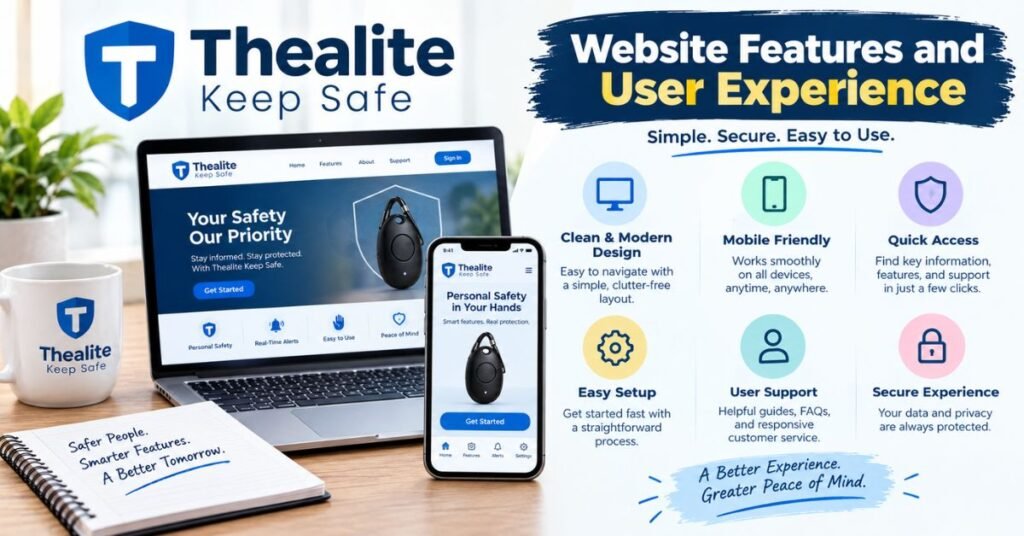
How easy is it to find an answer? That question defines website user experience. Good experience means fast pages, clear menus, readable text, and few interruptions. Poor experience means slow loading, crowded ads, and confusing layouts. Judging the Thealite Keep Safe digital experience means testing it yourself. Open a few articles on your phone and your laptop. Notice how quickly text appears.
Free tools help. Google’s PageSpeed Insights scores speed and mobile performance. Count the ads on a single page. Try the search box. Click through two categories. These tests reveal the real Thealitekeepsafe.com features and user experience. The subsections below cover navigation and privacy. They show what to look for and why each item matters.
Website Navigation and Content Accessibility
Good navigation feels invisible. You land on a page and know where to go next. Strong website navigation and accessibility includes a clear menu, topic categories, a working search bar, and readable fonts. Accessibility goes further. Headings should follow a logical order. Images need short text descriptions for screen readers. Color contrast should stay strong enough for tired eyes.
For a site with eight topic areas, tidy menus matter even more. Visitors can get lost in a large archive. Related-post links and category pages guide them back. Test the site with your keyboard alone. Zoom the text to a larger size. If the layout still works, the site respects its audience. These details shape every website user experience and reveal how much care went into the design.
Privacy, Transparency, and Online Trust
Trust grows when a site shows its cards. Look for a privacy policy that you can actually understand. Look for a cookie notice that offers a real choice. Look for a contact page with a working method. Check whether sponsored posts carry a clear label. These points form the core of privacy and security standards on a content site. They support online trust and transparency.
Visitors from Europe expect GDPR-style consent banners. Visitors elsewhere still benefit from the same openness. Website privacy and transparency also covers how the site treats comments, newsletter sign-ups, and analytics. A site that explains these things earns website security and user trust. A site that hides them invites doubt.
Thealitekeepsafe.com, SEO, and Digital Visibility
Search engines drive most of this site’s traffic. That’s clear from its structure. Narrow, question-style titles capture long-tail searches. A long-tail search is a very specific query typed by one person. Good search engine optimization helps a page answer that query better than rivals. When it works, small pages bring steady visitors. The strategy is common and legitimate.
However, wide topics create a challenge. A site covering AI, finance, health, and home security must work harder to look expert in each. Search engines favor sites that show depth in a subject. Readers do the same. That’s Fact 6, part two. Strong internal structure becomes essential as the archive expands. The two subsections below explain the main numbers and offer fixes. They also show how websites build online credibility and trust over time.
SEO Metrics and Website Authority Explained
Numbers tell part of the story. Marketers track organic clicks, search impressions, branded searches, and returning visitors. They also watch referring domains and backlinks. A backlink is a link from another site to a page. Many bloggers lean on website authority metrics such as Moz’s Domain Authority. Remember that Domain Authority is a third-party score. Google doesn’t use it as a ranking factor.
A high score never proves accurate content. A page with many backlinks isn’t automatically trustworthy. Rankings come from dozens of signals working together. Ordinary readers can skip the metric chase. Judge usefulness article by article. Strong digital brand recognition shows up when people type the site’s name directly into search. That behavior signals real loyalty.
H3: How the Website Could Improve Its SEO
Structure beats volume. A smarter plan groups related articles into clear clusters. Each cluster gets one strong pillar page. Related posts link to it and to each other. This helps readers move naturally and helps search engines understand the topic map. Refreshing older posts also pays off. A single updated guide can outperform five new thin ones.
| SEO Element | Why It Matters |
| Topic clusters | Show clear subject relationships |
| Internal links | Guide readers from page to page |
| Content pillars | Organize major themes under one roof |
| Original research | Adds value that rivals can’t copy |
| Regular updates | Keeps information current |
| Author profiles | Strengthens transparency and trust |
Right now the structure of the site appears to be still forming. Pillars around digital safety, technology, business, home protection, and marketing would give it a stronger backbone.
Thealitekeepsafe.com for Content Creators and Businesses
Smart creators study what works. A broad site like this offers a window into current trends. Watch which topics it covers. Notice how often it publishes. Observe how it structures headings and tables. Businesses researching digital marketing or emerging technology may also find useful reference points. The key filter is relevance to your own goals. Always compare claims with primary sources before acting on them.
The site also appears open to outside writers. That’s Fact 7. Many publishers accept contributors because fresh voices add variety. For writers, a good opportunity offers real audience value.
A backlink and a byline alone aren’t enough. Read the editorial rules before you pitch. Ask who the readers are. Ask how the editors review drafts. The subsections below cover the details of guest posting opportunities and publishing ethics.
Guest Posting and Content Partnership Opportunities
Look for a clear submission page first. A trustworthy outlet lists topics, word counts, and review steps. It also states whether links must be disclosed. Check the site itself for current guest posting opportunities before you send anything. Does Thealitekeepsafe.com accept guest posts? It appears to have the structure for contributor submissions. Confirm the live rules directly.
Then read any content partnership guidelines line by line. Ask three questions. Will my name and bio appear? Will paid or sponsored content be labeled? Will the editors fact-check my claims? Honest answers to those questions separate a real publishing partner from a link farm. Protect your own reputation too. Never submit work you wouldn’t put on your own portfolio.
Transparent Publishing and Editorial Practices
Commercial arrangements are normal in publishing. Sites use ads, affiliate links, and sponsored posts to fund their work. The problem starts when labels disappear. Clear disclosure keeps the relationship honest. It also follows rules set by regulators such as the FTC, whose guidance appears in the endorsement guide. Strong editorial transparency goes further.
It names editors, explains correction policies, and shows update dates. Readers notice these details even when they can’t name them. Together they make a site feel dependable. When sponsored content blends in with editorial content, readers feel tricked. Trust drops fast and rebuilds slowly. Quality should always outweigh publishing frequency.
What Can Publishers Learn From Thealitekeepsafe.com?
Growth without structure turns a library into a cluttered attic. That’s the big lesson here. Expanding into new topics can bring new readers. Each new topic also adds a new editorial duty. Someone must check facts. Someone must keep posts fresh. Someone must decide who the site serves. Publishers who skip those jobs end up with many pages and little trust.
The smarter goal is sustainable growth. Build a clear audience first. Pick a few strong pillars. Add new subjects only when the team can support them. Case in point: a small gardening blog adds cooking, then finance, then travel. Traffic jumps briefly. Quality falls. Readers leave. A focused plan would have kept both traffic and trust. The two subsections below offer practical steps.
Building a Recognizable Website Brand
Brands grow from repetition. Use the same voice, the same layout rules, and the same promise on every page. Choose three to five content pillars and defend them. Strong digital brand recognition means readers can describe your site in one sentence after two visits. For this site, the safety-first name offers a head start.
The next step is aligning content with that promise. Publishing more articles about privacy, scams, and home protection would sharpen its identity. Add a short mission statement on the About page. Add consistent author bios. Small, consistent moves compound over time. A recognizable brand also boosts website credibility because visitors remember it.
Improving Content Quality and Reader Trust
Quality work needs a process. Add fact-checking before publishing. Invite experts to review sensitive posts. Show update dates clearly. Refresh older high-potential pages instead of only writing new ones. Publish original research or first-hand tests where possible. These steps lift content accuracy and reliability. They also give readers proof of effort.
Readers feel the difference between a rewrite of other pages and a piece built from real experience. Display credentials near each byline. Link to primary sources. Correct mistakes openly. A visible correction policy signals confidence. It shows the editors care more about accuracy than ego. That habit steadily improves content quality assessment results from both readers and search engines.
Thealite Keep Safe: Website Profile and Key Details
Here’s the whole picture at a glance. The table below gathers the key details from this Thealite Keep Safe review. It works as a quick reference you can bookmark. Facts about monetization and guest contributions are marked as signals because they come from site structure rather than confirmed statements. Check the live site before you rely on them.
| Detail | Information |
| Website Name | Thealite Keep Safe |
| Domain | thealitekeepsafe.com |
| Primary Branding Focus | Online safety and digital protection |
| Actual Content Scope | Technology, AI, business, finance, SEO, health, education, home security |
| Content Format | Long-form informational articles and guides |
| Target Audience | General users, creators, businesses, marketers |
| Monetization Signals | Possible affiliate links, display ads, sponsored content |
| Guest Contribution | Appears to accept contributor submissions |
| Security Signal | HTTPS present, which encrypts data in transit |
| Recommended Reader Approach | Verify claims independently, especially health, finance, and security |
| Best Suited For | Readers wanting a broad, single-stop information resource |
| Not Recommended As | A sole source for critical health, legal, or financial decisions |
Read the table from top to bottom. The pattern is clear. The site offers breadth and convenience. It asks readers to bring their own judgment.
Frequently Asked Questions
What Is Thealite Keep Safe?
Thealite Keep Safe is an informational website at thealitekeepsafe.com. It publishes guides on technology, AI, business, finance, SEO, health, education, and home security. Its safety-focused name came first. Its content has since grown much wider. Treat it as a general digital information resource rather than a specialist authority.
What Does Thealite Keep Safe Mean?
The phrase suggests protection, awareness, and careful online behavior. That fits privacy and security themes. Today the site covers far more than safety. The name acts as a brand signal. It doesn’t promise expert security coverage on every page.
Is Thealitekeepsafe.com Safe to Visit?
It appears safe with normal browsing care. Check the spelling of the address. Avoid unexpected downloads. Don’t enter sensitive details without a clear reason. Run a quick Google Safe Browsing check for extra comfort. HTTPS protects the connection but doesn’t prove the content is accurate.
Is Thealitekeepsafe.com Legitimate?
Legitimacy depends on several signals together. Look for clear contact details, a visible privacy policy, named authors, and steady content quality. No single signal proves it. Run your own website legitimacy check and verify important claims with outside sources before acting on them.
Does Thealitekeepsafe.com Focus on Cybersecurity?
Partly. Safety and security appear in its branding and some articles. Yet the site also covers finance, AI, marketing, health, and home topics. It isn’t a dedicated cybersecurity resource. For serious threats use official agencies like CISA or licensed security professionals.
Does Thealitekeepsafe.com Accept Guest Posts?
The site appears to have a structure for contributor submissions. Rules can change at any time. Read the current guidelines on the site before you pitch. Ask about disclosure, editing, and link policies. Choose opportunities that offer real audience value.
Final Verdict
Yes, with open eyes. This Thealite Keep Safe review points to a broad content hub with a protective brand and uneven depth. It looks safe to visit under normal caution. It isn’t a security specialist. Its articles deserve a quick check for author, date, and sources. Its wide scope helps discovery but dilutes authority.
It appears open to contributors. If you want a general starting point for everyday digital topics, it fits. If you need expert advice on health, money, law, or serious security, look to official sources first.

Arslan Rafi is a writer and language enthusiast who creates easy-to-understand content about slang, expressions, words, and their meanings. His work focuses on explaining regional and modern language in a clear, engaging way, helping readers understand how words and phrases are used in everyday conversation.