Acoustic Meaning Slang: 6 Powerful Things You Need to Know
You saw someone comment “acoustic” under a video that had nothing to do with music, and now you’re stuck scrolling trying to figure out what you missed. You’re not alone. This word has been popping up in comment sections, group chats, and TikTok captions in a way that has nothing to do with guitars or unplugged concerts.
Here’s the thing: acoustic meaning slang is one of those internet terms that changes shape depending on where you see it. Sometimes it’s just a joke. Sometimes it’s a wordplay trick people use to dodge platform filters. And sometimes it touches on a much more sensitive topic.
This article breaks down the real meaning, where it came from, and how people actually use it today so you’re never left confused in the comments again.
What Does “Acoustic Meaning Slang?
In its everyday dictionary sense, “acoustic” describes sound or music played without electronic amplification, think an acoustic guitar or an unplugged song. That’s the meaning most people grew up with.
Online, though, acoustic slang meaning has drifted pretty far from that. In internet slang, “acoustic” is most commonly used as a stand-in word for “autistic.” People type it either as a joke, a soft way to bring up neurodivergence, or sometimes as a sneaky way to get around word filters on apps that flag or block the word “autistic.”
There’s also a lighter, more playful use where “acoustic” just means something is unplugged, low-effort, or old-school a callback to the original meaning, but applied to situations that have nothing to do with instruments. Someone might call a plan “acoustic” if it’s simple and low-tech.
So the short answer to what does acoustic mean in slang: it depends on context, but the version you’ll run into most is a slang substitute for “autistic,” often used casually or humorously.
See Also: TS Slang Meaning: 7 Powerful & Surprising Meanings Explained
Where Did “Acoustic” Slang Come From?
The exact origin isn’t confirmed, and that’s honestly normal for internet slang; most of it spreads faster than anyone can track it. What’s clear is that this acoustic internet term started gaining traction on platforms like TikTok, Discord, and X (formerly Twitter), where users often swap out sensitive or flagged words for near-sound-alikes.
It’s believed to have started as a way to talk about autism-related topics without tripping content moderation systems, which sometimes flag or shadowban posts using certain words tied to mental health or neurodivergence. “Acoustic” sounds close enough to “autistic” that it slipped through as a workaround.
From there, it spread the way most acoustic Gen Z slang does through comment sections, reaction videos, and memes. Once a few creators started using it, it caught on in group chats and became a recognizable inside reference, especially among younger internet users who already speak in coded, filter-dodging language.
How “Acoustic” Differs From Its Traditional Meaning
The traditional meaning of acoustic is tied strictly to sound unamplified instruments, natural resonance, physics classroom stuff. There’s no hidden layer to it.
The slang version strips away the music connection almost entirely. When you see acoustic meaning online, it’s rarely about sound at all. It’s either:
- A coded reference to autism or autistic traits
- A joking descriptor for something simple, unplugged, or “basic”
- A sarcastic label for someone acting a certain way
This is a pretty common pattern in internet slang: a normal word gets borrowed, twisted, and reused because it sounds like something else or fits a joke format. “Acoustic” just happens to rhyme closely enough with “autistic” to make the swap work.
What Does “Acoustic” Mean on TikTok and Social Media?
Acoustic meaning on TikTok shifts depending on the video and the comment section it shows up in. Context is everything here.
“Acoustic” as a Playful Internet Term
In a lot of comment sections, “acoustic” is used lightly, almost like a filler joke word. Someone might describe a chaotic clip as “acoustic behavior,” meaning it’s random, unfiltered, or a little off-the-wall similar to how people use words like “unhinged” or “feral.” In this sense, it’s less about autism and more about general internet humor, where words get recycled for comedic effect regardless of their original meaning.
“Acoustic” as a Reference to Autism
The more direct use is as a stand-in for “autistic.” You’ll see this in captions describing quirky habits, special interests, or specific mannerisms sometimes self-referential (“I’m feeling very acoustic today”), sometimes pointed at someone else’s behavior. This use exists in a gray area. Some people in neurodivergent communities use it themselves, almost like reclaiming or softening the word. Others find it reduces a real diagnosis to a punchline. Both readings exist online at the same time, which is part of why the term causes confusion.
How Do People Use “Acoustic” in Texting and Online Chats?
Acoustic meaning in texting usually shows up in casual, low-stakes conversations group chats, Discord servers, or quick replies to a screenshot someone sent. It’s rarely a standalone statement; it almost always reacts to something specific that just happened.
Acoustic Slang Examples in Everyday Conversations
Here’s how the term shows up in real conversations, mixing the joke use and the autism-reference use:
- bro that was so acoustic of you
- she’s giving very acoustic energy rn
- ngl this whole group chat is acoustic
- why are you acting acoustic today
- that plan sounds kind of acoustic tbh, no offense
- he said the most acoustic thing in class
- not me being acoustic about my favorite show again
- this whole situation feels acoustic
- stop being acoustic and just answer the question
- my brain is running on acoustic mode rn
- that’s such an acoustic thing to say
- lowkey diagnosed myself as acoustic after that quiz
- the way she explained that was so acoustic
- you’re acting acoustic, calm down
Funny Examples of “Acoustic” in Messages
- me trying to explain my special interest for 20 minutes: acoustic behavior
- him: “I organized my socks by vibe” … acoustic
- when the group project falls apart because everyone’s acoustic
- “I made a whole playlist for one bus ride” peak acoustic
- my dog is more acoustic than half my friends for
“Acoustic” Used in Social Media Comments
- “the way he lined up his cards perfectly” 💀 acoustic
- this whole video is acoustic culture and I’m here for it
- comment section: “not the acoustic jokes again lol”
- “she’s so acoustic and I love her for it”
Is “Acoustic” Slang Offensive or Disrespectful?
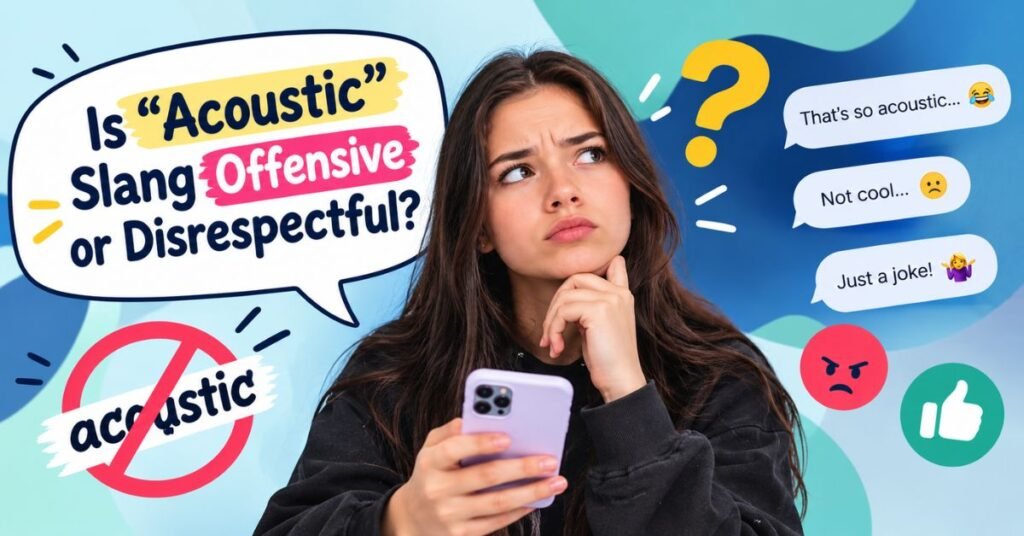
This is where things get a little more serious, and it’s worth being upfront about it. Because “acoustic” is often used as a swap for “autistic,” it sits close to sensitive territory involving real people and a real diagnosis.
Used carelessly or as a punchline aimed at someone’s actual behavior, it can come across as mocking or dismissive of autistic people. That’s a fair criticism, and it’s one you’ll see raised in comment sections regularly. On the other hand, some autistic and neurodivergent users use the word themselves, self-referentially, as a lighter or safer way to talk about their own traits online partly because platforms have a history of suppressing posts that openly mention autism or mental health.
So context and intent matter a lot here. If you’re using it to describe yourself or your own habits, most people read it as harmless. If you’re using it to make fun of someone else’s genuine traits or behavior, it can land as derogatory language, even if that wasn’t the goal.
Acoustic vs. Autistic: What’s the Difference?
| Term | Meaning/Context |
| Acoustic (slang) | Casual, coded, or joking internet stand-in for “autistic,” used in captions, comments, and texts |
| Autistic | A real neurological and developmental condition; a formal, clinical term describing autism spectrum traits |
| Acoustic (original) | Unamplified sound, like an acoustic guitar or unplugged performance |
The acoustic vs autistic comparison basically comes down to register. “Autistic” is a real, clinical word tied to actual diagnoses and lived experience. “Acoustic” is internet shorthand — sometimes playful, sometimes filter-dodging, sometimes a little careless. They sound alike, but they don’t carry the same weight, and mixing them up in the wrong setting (like a serious conversation about someone’s diagnosis) can come off as dismissive.
Acoustic vs. Analog: Understanding the Difference
People sometimes confuse “acoustic” with “analog” since both terms get used to describe something unplugged or old-school. Here’s the actual difference:
See Also: Meta Meaning Slang: 7 Powerful Meanings Explained
| Term | Meaning/Context |
| Acoustic | Slang for autistic, or literally unamplified sound/music |
| Analog | Refers to non-digital tech or methods vinyl records, film cameras, handwritten notes |
“Analog” leans more toward describing tools and formats like choosing a paper planner over an app. “Acoustic,” in its slang form, is almost always about people and behavior, not objects or technology. If someone calls their lifestyle “analog,” they mean low-tech. If someone calls a person “acoustic,” they’re usually making the autism reference.
Related Slang Terms and Internet Expressions
If “acoustic” caught your attention, you’ve probably seen these floating around the same corners of the internet:
- Rizz – charisma or the ability to smoothly attract someone
- Sigma – a lone-wolf, independent personality type, often used ironically
- PMO – short for “put me on” or “pisses me off,” depending on context
- Ohio – slang for something weird, chaotic, or off-brand
- Unhinged – wild, unpredictable, or over-the-top behavior
- Feral – acting chaotic or out of control, usually in a funny way
- NPC behavior – acting robotic, scripted, or without independent thought
- Delulu – short for delusional, usually used playfully
These terms share a pattern with acoustic slang meaning: ordinary words get bent into new shapes to describe personality, mood, or vibe a very common move in modern slang expressions.
When Should You Avoid Using “Acoustic” as Slang?
Knowing when to skip this word matters just as much as knowing what it means. Here’s when to hold back:
- Avoid it in formal writing, school assignments, or professional messages
- Don’t use it to describe someone’s actual autism diagnosis without knowing how they feel about the term
- Skip it in conversations with people who might not know the slang meaning it can come across as confusing or rude
- Don’t use it as a way to mock someone’s real traits or behavior
- Avoid it around younger kids who might repeat it without understanding the context
- Be careful using it publicly if you’re not sure how your audience will read it tone doesn’t always translate in text
Frequently Asked Questions
What does acoustic mean in Gen Z slang?
In Gen Z slang, “acoustic” is mostly used as a casual stand-in for “autistic,” often in jokes or self-descriptions. It can also just describe something simple or low-effort, depending on the sentence.
What does acoustic mean on TikTok?
On TikTok, “acoustic” usually shows up in comments describing quirky or unfiltered behavior, or as a lighter way to reference autistic traits. The exact meaning depends heavily on the video and the tone of the comment section.
What do we mean by acoustic?
Acoustic means something related to sound or music produced without electronic amplification. In music, it often refers to instruments like acoustic guitar or piano.
What does “acoustic kid” mean?
“Acoustic kid” is internet slang, often used humorously as a misspelling or playful substitute for “autistic kid.” Its meaning depends on the context.
What does it mean when someone sings acoustic?
Singing acoustic usually means performing with minimal electronic backing, often accompanied by an acoustic guitar or piano. It creates a simpler, more natural sound.
What does a song being acoustic mean?
An acoustic song is typically performed using non-electric or minimally amplified instruments. It often sounds more stripped-down and intimate than the original version.
Final Thoughts
At the end of the day, acoustic meaning slang is a good example of how fast internet language moves and how much context shapes meaning. What started as a simple word about unplugged music has turned into a coded, sometimes playful, sometimes sensitive stand-in for “autistic” across TikTok, texting, and social media comments.
Whether you use it, avoid it, or just need to understand it for the next time it shows up in your feed, now you know exactly where it comes from and how people actually use it no more guessing what someone meant by “acoustic” in your group chat.

Arslan Rafi is a writer and language enthusiast who creates easy-to-understand content about slang, expressions, words, and their meanings. His work focuses on explaining regional and modern language in a clear, engaging way, helping readers understand how words and phrases are used in everyday conversation.