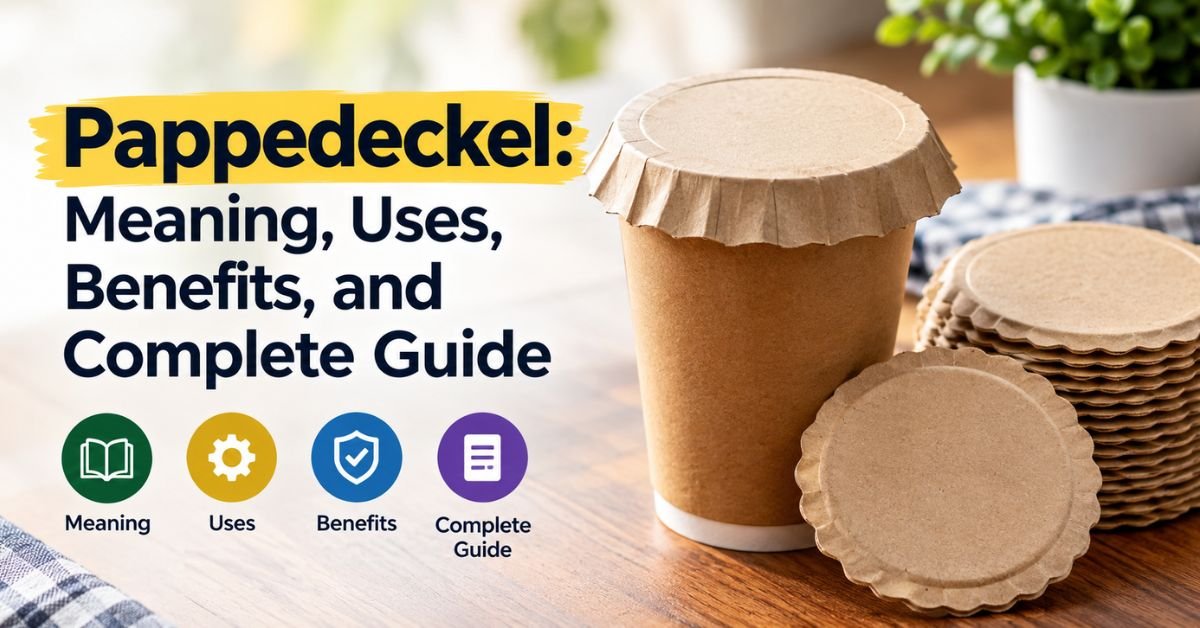
Pappedeckel: Meaning, Uses, Benefits, and Complete Guide
Ever spotted the word Pappedeckel on a product page and felt stuck? You’re not alone. The term sounds German because it is. Yet it hides a simple idea: a flat, handy piece of board. Read on for the Pappedeckel meaning, real uses, clear benefits, honest limits, and smart buying tips. By the end, you’ll know exactly what to order and what to skip.
What Does Pappedeckel Mean?
Words from another language can trip you up fast. Pappedeckel is a good example. It joins Pappe, the German word for cardboard, with Deckel, which means lid or cover. Put them together and you get a cardboard lid or cover. That’s the simplest definition of Pappedeckel. It also helps you hunt for cardboard covers online.
Read More: 16:Snapjotz.com Review: Essential Features, Benefits, and Safety Tips
Here’s the twist. Standard dictionaries don’t list this exact spelling. Duden lists Pappdeckel and names Pappendeckel as a related form. So Pappedeckel works as a common variant. Don’t let that bother you. Shoppers use all three spellings. The Pappedeckel meaning stays the same across them.
Pappedeckel Meaning in English
Pappedeckel in English most often means a cardboard lid, a cover, or a flat piece of board. English Wiktionary lists two senses for Pappdeckel: the lid of a cardboard box and a pasteboard book cover. German Wiktionary adds the plain material and a single sheet of it. For drink coasters, Germans usually say Bierdeckel. The table below sorts the key terms.
| German term | English meaning | Typical use |
| Pappe | Cardboard or paperboard | The material itself |
| Deckel | Lid or cover | Closing a container |
| Pappdeckel | Cardboard lid or flat board piece | Covers, backing, sheets |
| Pappendeckel | Variant form of the same idea | General board use |
| Bierdeckel | Beer mat or coaster | Drinks service |
| Wellpappe | Corrugated board | Shipping cartons |
Cardboard, Paperboard, and Pappedeckel: Key Differences
People mix up these words all the time, so let’s untangle them. The cardboard and paperboard differences come down to structure and thickness. Paperboard is thick, solid paper. Corrugated cardboard packaging adds a wavy layer between two flat liners, which gives cushioning. A Pappedeckel is a finished piece made from either one. Most small covers use solid board because it cuts cleanly and stays flat. Knowing these cardboard material types helps you pick the right base.
| Material | Structure | Best for |
| Solid paperboard | Flat, single or layered | Coasters, lids, dividers |
| Corrugated board | Fluted layer between liners | Shipping boxes, cushioning |
| Coated paperboard | Board with a surface layer | Moisture exposure, printing |
How Context Influences the Meaning of Pappedeckel
Context changes everything with this word. A cafe owner thinks of cardboard coasters. A packer thinks of a flat cover that keeps goods in place. A crafter thinks of cardboard sheets for a model. Each person needs different thickness and strength. So don’t rely on the word alone. Check photos, dimensions, and material notes before you buy. A quick question to the seller saves a lot of hassle.
Common Uses of Pappedeckel

Look around any cafe, warehouse, or craft room. You’ll spot cardboard working quietly in the background. The uses of cardboard covers stretch far wider than most people guess. They hold up drinks. They guard products. They keep closets tidy. They even turn into school projects. Each job needs a slightly different design, so matching form to task matters most.
Read More: How to Fix the xud3.g5-fo9z Python Error: A Step-by-Step Guide
Think of paper-based packaging as a toolbox. One tool never fits every job. A thin disc suits a cup. A stiff board suits a shipping box. Fiber-based materials like these shine because makers can cut them into almost any shape. The five areas below show where Pappedeckel earns its keep.
Food and Beverage Accessories
Cafes love small board pieces. Cardboard discs catch drips under a glass, and beverage cup accessories like sleeves and disposable cup lids keep drinks tidy. Some trays also use board as a liner. One rule matters here. Anything touching food must use food contact materials made for that job. The FDA’s food packaging page explains US rules, while EU buyers should check Regulation (EC) No 1935/2004.
Product Packaging and Protective Covers
Packers use flat board all day long. Packaging inserts hold items in place. Product separators stop bottles or boxes from touching. Cardboard protective covers close a compartment or guard a surface. These pieces give you protective packaging solutions at a low price. They also take print well, so one cover can show care instructions and a logo. Still, a flat cover won’t cushion fragile goods alone.
Household Storage and Organization
Your home probably holds a dozen cardboard helpers already. Cardboard storage solutions like archive boxes, photo cases, and drawer dividers keep clutter under control. A fitted lid also blocks dust. Place them in dry rooms only. Damp basements and leaky garages weaken board fast. For prized documents or photos, add acid-free options or move to sturdier containers.
Arts, Crafts, and DIY Projects
Crafters adore board. It cuts, folds, glues, and paints with ease. Kids turn recycled cardboard into castles, masks, and mini theaters. Designers use paperboard sheets for quick prototypes before spending on costly materials. Thin board suits hand scissors. Thick board adds rigidity but needs a sharp knife. Always cut on a mat and take your time.
Commercial and Industrial Applications
Factories run on small, repeatable parts. Industrial cardboard applications include backing boards, layer pads between flat goods, and industrial packaging components like caps and trays. Consistency matters most. Every piece must match in size, thickness, and edge quality. Even a small error can jam an automatic packing line. So smart buyers check tolerances, not just price.
Key Benefits of Pappedeckel

Why do so many businesses pick board over other options? The answer lies in a handful of practical wins. The benefits of cardboard packaging show up in cost, weight, design freedom, and branding. They also reach into the planet’s health when you choose well. None of these wins are magic. They depend on grade and use.
Think of board as a friendly all-rounder. It rarely tops one category. Yet it scores well across many. That’s why paperboard products appear in so many industries. The next sections break down each perk. Read them with your own project in mind.
Lightweight and Easy to Handle
Board feels feather-light next to glass, metal, or thick plastic. That makes shipping cheaper and handling easier. A packer lifts more boxes with less strain. Over thousands of units, small weight savings add up. A fair warning, though. A reinforced cover can weigh more than a razor-thin plastic film. Compare options at the same performance level.
Affordable and Cost-Effective
Price is where board really shines. Simple pieces cost little at volume. Standard shapes often skip tooling fees entirely. Yet cheap can backfire. A weak cover that tears or soaks through creates waste. Count the full cost of use. That includes storage, rejects, handling, and disposal. Often a slightly better board saves money in the end.
Customizable Shapes, Sizes, and Designs
Need a hexagon with a notch? Board can do that. Custom cardboard covers come in round, square, or odd shapes. Packaging customization lets you match a cover to your exact product. A snug fit cuts movement and looks neat. It also speeds up assembly. Die-cut cardboard works best for big runs. Digital cutting suits small batches and test samples.
Printing and Branding Opportunities
Board makes a fine canvas. Printed cardboard packaging carries logos, colors, and handling tips right on the surface. A cafe can stamp its brand on every coaster. A shop can print a thank-you note on a divider. Print quality depends on the finish, the board color, and the ink system. For premium work, always approve a sample before you place a large order.
Environmental Benefits of Recyclable Materials
Paper fibers can return to the recycling stream again and again. That’s a big plus for recyclable packaging and the circular economy. Eco-friendly packaging often starts with recycled content and right-sized design. Sustainable cardboard products also tend to use less material overall. Still, “paper” doesn’t always mean “green.” Coatings, glues, and grease can change the story. The eco section below digs deeper.
Pappedeckel Materials and Manufacturing Process

Knowing how board is made helps you judge it. Strong knowledge of cardboard manufacturing lets you spot quality and ask smarter questions. The cardboard production process starts with fiber and ends with a cut, printed piece. Along the way, small choices shape strength, color, and feel.
Cardboard material properties include stiffness, density, surface smoothness, and moisture behavior. Each property links back to the fiber and the process. Strong cardboard packaging materials come from careful control at every step. The simple flow below shows the main stages.
| Stage | What happens | Why it matters |
| Fiber prep | Pulp from wood or recovered paper | Sets strength and color |
| Board forming | Fibers press into layers | Controls thickness |
| Drying | Heat removes water | Affects flatness |
| Coating or printing | Surface treatment added | Changes look and moisture response |
| Cutting | Shapes are cut out | Decides fit and edge quality |
Virgin Fibers vs. Recycled Cardboard
Virgin paper fibers come straight from trees. They’re long and strong. Makers pick them when they need clean surfaces or high strength. Recycled paper fibers come from used paper. They cut demand for new wood. Neither choice wins every time. Recycled cardboard may look slightly grayer or rougher. Look for sustainable material sourcing marks like FSC certification when wood fiber is involved.
Thickness, Stiffness, and Material Grades
Thick doesn’t always mean strong. Paperboard thickness and stiffness depend on fiber quality, density, layers, and grain direction. Many standards treat paper heavier than about 224 grams per square meter as board. Suppliers sell many packaging board grades, so ask for the spec sheet. Packaging thickness gets quoted in millimeters or points. Always test a sample under real conditions before you commit.
Cutting, Shaping, and Finishing Techniques
Cardboard cutting and finishing shape the final result. Die cutting suits high volumes because it repeats the same shape quickly. Digital cutters suit small runs and prototypes. Finishing can add embossing, laminating, or coating. Each step changes looks and performance. Rough edges can snag machines or annoy customers. Ask suppliers for edge-quality photos so you know what to expect.
Moisture Resistance and Protective Coatings
Raw board drinks water. Moisture-resistant cardboard uses coatings or special treatments to slow that down. Water-resistant paperboard handles a few drops yet fails under long soaking. Don’t confuse that with waterproof. Coatings can also affect recycling, so check with the maker. To learn how to protect cardboard from moisture, store it dry, off the floor, and away from steam.
Quick tip: A coating that blocks water may also block recycling. Ask before you buy.
How to Choose the Right Pappedeckel Product
Picking board feels simple until you order the wrong one. Imagine 5,000 covers that don’t fit. Ouch. A clear process fixes that. Packaging material selection works best when you follow steps in order. The six steps below work for hobbyists and big buyers alike. If you’ve asked how to choose the right cardboard cover, start here.
Take notes as you go. Write down your size, use, and budget. Then compare products against that list. This habit makes supplier talks faster and clearer. It also protects you from fancy sales pitches that miss your real needs.
Step 1: Identify Your Intended Use
Start with the job. Ask what the cover must do. Does it hide a gap, guard a surface, soak up drips, or look sharp on a shelf? A coaster needs absorbency. A divider needs rigidity. A storage lid needs a snug fit. Write one sentence that sums up the main goal. That sentence will guide every later choice.
Step 2: Choose the Correct Size and Dimensions
Measure twice. Then measure again. Custom packaging dimensions should come from the inside space of your container, not the outside. Record diameter or length, width, and thickness in both millimeters and inches. Add a small allowance for the process you use. Automatic lines need tight tolerances. Hand projects can relax a bit.
Step 3: Select the Appropriate Material and Thickness
Match the grade to the pressure it will face. Light decor can use thin board. Protective work needs stiffer stock. Think about handling, friction, and damp air too. For factors affecting cardboard strength and durability, check fiber type, layers, grain direction, and moisture level. Then run a quick bend test on a sample.
Step 4: Check Food Safety and Hygiene Requirements
Never guess here. Food-safe paperboard has approved materials, inks, adhesives, and coatings. Ask suppliers for written compliance papers. A clean look proves nothing. So is cardboard suitable for food packaging? Yes, but only when made and certified for that job. General-purpose board often isn’t. Keep the paperwork on file for audits.
Step 5: Compare Durability, Cost, and Sustainability
Now weigh the trade-offs. Cardboard product durability matters for reuse. Cost matters for margins. Sustainability matters for brand image. Score each option from one to five. The table below shows a simple way to compare.
| Option | Durability | Cost | Eco profile |
| Plain recycled board | Medium | Low | High |
| Coated board | High | Medium | Medium |
| Virgin fiber board | High | Medium to high | Medium |
Step 6: Request Samples Before Placing an Order
Samples save money. Ask two or three suppliers for pieces. Test thickness, stiffness, cut quality, and fit. Expose them to real conditions like spills or stacking. Also judge cardboard supplier quality. Check delivery speed, minimum orders, and consistency. A small test now prevents a big headache later.
Limitations and Challenges of Pappedeckel
No material is perfect. Board has weak spots, and smart buyers know them. Facing the limits early builds trust and cuts returns. It also helps you decide when another material fits better. Honest planning beats unpleasant surprises every time.
Most problems trace back to three things: water, load, and wear. Quality gaps between suppliers and disposal confusion round out the list. The table below shows when to look at alternatives.
| Situation | Better choice |
| Constant wet exposure | Plastic or coated molded options |
| Heavy concentrated loads | Wood, metal, or thick corrugated |
| Daily reuse and washing | Silicone, metal, or durable plastic |
Water and Moisture Sensitivity
Water is board’s biggest foe. A spill softens fibers and bends edges. Even humid air can warp thin pieces. Coatings help yet never make board waterproof. If your setting is wet, pick a treated grade or a different material. Store spare stock in a dry spot, sealed from damp walls and floors.
Weight and Load-Bearing Limitations
Flat board handles light pressure well. A sharp, narrow load can crush it fast. Cardboard weight capacity depends on thickness, span, support, and design. No single safe rating fits every product. If a cover must carry items, test the real setup. Corrugated structures usually carry more than solid sheets of the same thickness.
Durability During Repeated Use
Folding, rubbing, and handling wear down paper fibers. Edges fray. Surfaces scuff. A piece made for one-time use may not last a week of daily work. For reuse, compare lifespan against washable plastic or metal. Reusable packaging materials sometimes cost more upfront. Over many cycles they can still save money and waste.
Variations in Quality Between Suppliers
Two covers can look alike and act very differently. Fiber mix, density, cutting accuracy, and finish all vary. That matters most for big orders and fast lines. Ask for written specs and approved samples. Keep a reference piece on file. Then you can compare every new batch against it.
Recycling and Disposal Challenges
Paper-looking items don’t always recycle easily. Plastic laminates, metal foils, glues, and grease can block the process. Local rules differ widely around the world. Check your area’s guidance for cardboard disposal methods. When in doubt, ask the maker for a full material breakdown. Clean, dry, uncoated board has the best odds.
Practical Examples of Pappedeckel in Everyday Life
Real stories make ideas stick. The four cases below show how people pick and use board. Each one is an illustrative scenario built from common situations. Notice how the job shapes the choice every time. The name of the product matters far less than what it must do.
You’ll see cardboard packaging solutions in cafes, shops, workshops, and factories. Each case also shows a lesson. Test early. Measure well. Match grade to need. Those habits apply to nearly every project you’ll meet.
How Cafes Use Cardboard Beverage Coasters
Case study (illustrative): A small cafe wants a logo on every table. The owner tests three disposable cardboard products. One soaks through in minutes. Another stays crisp for an hour. The third leaves ring marks. The owner picks the crisp one after a week-long trial. The lesson is clear. A short real-world test beats any product description.
How Online Stores Protect Small Products
Case study (illustrative): An online shop sells small glass jars. Early shipments arrive with chipped lids. The owner adds cardboard dividers and a packaging liner inside the carton. Breakage drops sharply. The key insight was that the insert couldn’t fix a weak outer box. Only the full package design solved the problem.
Creative Projects Using Recycled Cardboard
Case study (illustrative): A teacher collects clean delivery boxes for a class project. Students cut them into small stage sets. Thin board bends too much, so the class doubles the layers. The project costs almost nothing. It also teaches cardboard waste reduction by example. Painted pieces later need different disposal, so the teacher sorts them first.
How Manufacturers Use Custom Cardboard Covers
Case study (illustrative): A gadget maker needs 10,000 covers for a new line. The buyer lists size, grade, finish, and tolerance in writing. Two suppliers send samples. One cut is slightly off and jams the machine. The team picks the other. Documenting the spec upfront saved the launch from costly delays.
Is Pappedeckel Eco-Friendly?
It can be, but not automatically. Paper starts as a renewable fiber, and that gives it a head start. Yet true environmentally responsible packaging depends on the full life of the product. Sourcing, energy, transport, coatings, and disposal all count. Treat any single green label with healthy doubt.
Smart buyers look at the whole picture. They ask for facts rather than slogans. They also compare sustainable packaging alternatives side by side. The sections below show what to check. Use them as a quick checklist when you review suppliers.
Recycled Content and Responsible Material Sourcing
Recycled content cuts demand for virgin wood. Responsible forestry protects habitats. Look for clear claims, like a stated percentage of recycled fiber. Certifications from groups such as FSC add trust. Vague words like “natural” or “green” prove nothing. A good supplier shares numbers and papers. A weak one dodges the question.
Factors That Affect Cardboard Recyclability
The cardboard recycling process pulps used paper, cleans it, and presses it into new sheets. Many things can disrupt it. Plastic films, wax, foil, strong adhesives, and food grease all cause trouble. Local plants also differ in what they accept. Uncoated board usually fares best. If recycling matters to you, ask about the full layer structure before buying.
Reusable vs. Single-Use Cardboard Products
Some board can live many lives. Clean, dry pieces work well for storage and craft jobs. Food-contact pieces usually shouldn’t be reused. Contamination and hygiene risks rise with every use. Decide based on safety first and cost second. When reuse isn’t safe, choose a recyclable option and dispose of it properly.
Ways to Reduce Cardboard Waste
Want to know how to make cardboard packaging more sustainable? Start with right-sized pieces. Oversized or too-thick covers waste fiber and money. Reuse clean offcuts for dividers or crafts. Order smaller trial runs before big ones. Good waste management also means sorting board from plastic and food scraps. These small habits add up quickly.
Pro tip: The greenest cover is often the one you never had to throw away.
Frequently Asked Questions
What Does Pappedeckel Mean in English?
It means a cardboard lid, cover, or flat piece of board. The word blends Pappe for cardboard and Deckel for lid. Standard dictionaries list the spellings Pappdeckel and Pappendeckel. So you’ll see Pappedeckel used as a common variant in searches and shops.
What Is Pappedeckel Used For?
What is Pappedeckel used for? It covers drink coasters, container lids, dividers, backing boards, storage covers, and craft bases. Businesses use it for protective packaging and separators. Homes use it for tidy storage. Schools use it for projects. The exact use depends on strength and moisture resistance.
Is Pappedeckel the Same as Cardboard?
Not quite. Cardboard is the material. A Pappedeckel is a product made from it. That product might be a lid, a disc, or a sheet. The difference between cardboard and paperboard also matters. Paperboard is thick solid paper, while corrugated board has a fluted layer inside.
Can Pappedeckel Be Recycled?
Is Pappedeckel recyclable? Often yes. Plain, clean, uncoated board usually enters paper recycling easily. Coatings, plastic layers, foil, and grease can block it. Local rules also vary. Check with your area’s waste management service before you toss a piece in the bin.
Is Pappedeckel Safe for Food Packaging?
Only when the maker designed and approved it for food contact. General board may carry unsafe inks or glues. Ask for written proof of compliance. In the US, see FDA guidance. In the EU, check Regulation (EC) No 1935/2004. When unsure, skip direct contact with food.
Is Pappedeckel Waterproof?
No. Plain board absorbs water. Coated versions resist drops and brief contact. They still fail under long soaking. Think “water-resistant,” never “waterproof.” For truly wet use, pick plastic, metal, or a specially treated option. These eco-friendly alternatives to plastic packaging work best in dry or lightly damp settings.
How Do You Choose the Right Pappedeckel Product?
Follow six steps. Define the use. Measure the size. Pick the grade. Check food safety. Compare durability, cost, and sustainability. Then test samples. The best materials for custom cardboard covers match your job rather than a trend. For commercial work, cardboard covers for commercial applications should always come with written specs.
Conclusion
Pappedeckel may look like a tricky foreign word. Underneath, it’s a friendly idea: a cardboard lid, cover, or flat board. The spelling varies, yet the Pappedeckel meaning stays steady. You’ve seen how it works in cafes, shops, homes, and factories. You’ve also seen where it struggles, mainly with water and heavy loads.
Now put that knowledge to work. Define your job. Measure with care. Pick the right grade and confirm food safety if needed. Test samples before you buy in bulk. Choose recycled cardboard or other greener options when they fit. Do these things and you’ll land on the right cover the first time.

Arslan Rafi is a writer and language enthusiast who creates easy-to-understand content about slang, expressions, words, and their meanings. His work focuses on explaining regional and modern language in a clear, engaging way, helping readers understand how words and phrases are used in everyday conversation.