FRABOC Explained: The Ultimate Guide to Meaning, History & Cancer Risk Assessment (2026)
You spot “FRABOC” on an old referral letter. Maybe it sits on a GP note or a cancer information page. What does it mean? Does it still matter? These questions are fair. This guide explains the FRABOC meaning, the FRABOC history and the tools doctors use today.
Cancer risk can feel confusing. A clear picture helps you ask better questions. The sections below cover how the tool worked, what its groups meant and what took its place. This article offers general information only. It isn’t medical advice.
Quick Answer: What Is FRABOC?
FRABOC (also written FRA-BOC) was an online FRABOC assessment tool. It helped healthcare professionals sort a woman’s family medical history into a broad risk group. The tool covered familial breast and ovarian cancer. Cancer Australia published it for GPs and nurses. It wasn’t a cancer test. It wasn’t a diagnosis either.
Picture a map reader. The tool looked at a family’s cancer pattern and pointed to a risk zone. Then a doctor chose the next step. Today the tool is gone. Newer modern cancer risk assessment tools such as iPrevent have taken over.
| Item | Quick answer |
| Full name | Familial Risk Assessment – Breast and Ovarian Cancer |
| Creator | Cancer Australia (originally the National Breast and Ovarian Cancer Centre) |
| Users | GPs, nurses and other health professionals |
| Main job | Group family history into risk levels |
| Status | No longer available |
| Replacement | iPrevent, with CanRisk and IBIS also in use |
What Does FRABOC Stand For?
The FRABOC full form is Familial Risk Assessment – Breast and Ovarian Cancer. Each word has a job. “Familial” means shared within a family. “Risk assessment” means estimating a chance. “Breast and Ovarian Cancer” names the two cancers the tool covered.
Some people write FRA-BOC with a hyphen. Both spellings mean the same thing. Travelers may see the same letters in flight searches. FRA is Frankfurt Airport in Germany. BOC is Bocas del Toro in Panama. That route has no link to health.
| Word | Plain meaning |
| Familial | Shared across relatives |
| Risk | The chance of a future event |
| Assessment | A careful estimate |
| Breast and Ovarian Cancer | The two cancers covered |
The History and Development of FRABOC
The FRABOC history starts with the National Breast and Ovarian Cancer Centre. That group produced guidance on familial aspects of breast and ovarian cancer in 2010. It merged into Cancer Australia in 2011. The online tool then lived on Cancer Australia’s website. A 2015 guide later refreshed the advice.
Newer models soon appeared. A Peter Mac conference slide says iPrevent launched in 2018. Cancer Australia later retired the old tool and pointed to newer options. This shift mirrors a wider trend in clinical genetics. Broad boxes gave way to personalized risk evaluation.
| Year | Milestone |
| 2010 | NBOCC familial risk guide |
| 2011 | NBOCC joins Cancer Australia |
| 2015 | Updated Cancer Australia guide |
| 2018 | iPrevent launches |
| Later | FRABOC leaves the Cancer Australia site |
What Was FRABOC Used For in Cancer Risk Assessment?
The FRABOC purpose was simple. It turned a messy family story into a clear group. One sick relative doesn’t mean high risk. Doctors needed the whole pattern. They checked how many relatives were affected and how close they were. They also checked the cancer type and the age at diagnosis.
A result then guided the next move. A doctor might refer a patient to familial cancer clinics. Another might suggest genetic counseling. Others simply talked through cancer screening recommendations. This answers a common question: what was the purpose of the FRABOC tool? It supported everyday FRABOC cancer risk assessment in GP rooms.
How Did the FRABOC Assessment Tool Work?
A health professional began by asking about close relatives. Next came the cancer type and age for each person. The tool then placed the woman into one of three groups. This is how FRABOC assessed breast cancer risk. It relied on patterns rather than lab results.
Family stories change. A cousin may receive a new diagnosis. A sister may take a genetic test. Doctors therefore updated the history over time. This kept the FRABOC medical assessment current.
Family History Information
The FRABOC family history assessment covered first-degree relatives such as parents and siblings. It also covered second-degree relatives such as grandparents and aunts. Both sides of the family counted. A good medical family history questionnaire captures every branch.
Assessing Breast Cancer Risk
For FRABOC breast cancer risk, doctors weighed the number of affected relatives and how close they were. Age at diagnosis mattered a lot. Cancer in both breasts raised concern. So did breast cancer in a male relative. These are classic breast cancer risk factors in a family.
Evaluating Ovarian Cancer Risk
FRABOC ovarian cancer risk checks counted close relatives with ovarian cancer. Doctors also looked at early breast cancer in the same family. One case alone didn’t prove an inherited cause. Several cases made a stronger signal. Experts list such family links among ovarian cancer risk factors.
Identifying Familial Cancer Patterns
Doctors looked for family cancer patterns. Several cases on one side raised suspicion. Young diagnoses did too. Some patterns point toward hereditary cancer syndromes. Some Australian resources also list Ashkenazi Jewish ancestry as a flag.
The Three FRABOC Breast Cancer Risk Categories
The FRABOC risk categories sorted women into three groups. This is a form of cancer risk stratification. The old figures below match RACGP guidance. They describe the past only.
What are the three FRABOC risk categories? The table shows each one. Please don’t use these numbers to judge your own risk today. Modern tools weigh far more information.
| Category | Share of women | Breast cancer risk to age 75 |
| Average or slightly increased | More than 95% | About 1 in 11 to 1 in 8 |
| Moderately increased | Fewer than 4% | About 1 in 8 to 1 in 4 |
| Potentially high | Fewer than 1% | About 1 in 4 to 1 in 2 |
Average or Slightly Increased Risk
This group held most women. It included women with no confirmed family cancer. It also covered one first-degree relative diagnosed at 50 or older. Average breast cancer risk still isn’t zero risk. Regular screening for the general population still applies.
Moderately Increased Risk
Moderate breast cancer risk applied to a small group. One first-degree relative diagnosed before 50 could place a woman here. Two close relatives on one side could too. Stronger warning signs had to be absent.
Potentially High Risk
The high-risk breast cancer category held fewer than 1% of women. It covered families with several cases on one side plus extra red flags. Examples include breast cancer before age 40 and cancer in both breasts. A known gene change also counted. Doctors often referred these women to a family cancer clinic.
Why Is Family History Important in Cancer Risk Assessment?

Breast cancer family history works like a weather map. It shows patterns rather than a single storm. Most cancers aren’t inherited. Yet some families carry shared gene changes. Spotting them early can open the door to better care.
How does family history affect breast cancer risk? Closeness, number, cancer type and age all play a part. A mother with early breast cancer says more than a distant cousin with late disease. This is why familial breast cancer risk needs a careful, whole-family view.
Breast Cancer on the Mother’s Side
Maternal cases get noticed first. Families talk about mothers and aunts more often. Even so, that habit can hide the father’s side. Record every branch. Doing so gives a truer picture of inherited breast cancer risk.
Breast Cancer on the Father’s Side
Gene changes pass through either parent. A father can carry a change in breast cancer susceptibility genes without ever developing the disease. His sisters, mother or aunts may hold clues. Never leave the paternal side out of the story.
Multiple Family Members With Cancer
Several cases on one side matter more than scattered ones. Add young ages and a single pattern emerges. That pattern may suggest genetic predisposition to cancer. Doctors then consider genetic counseling services for the family.
Understanding BRCA1 and BRCA2 in Familial Cancer Risk
How are BRCA1 and BRCA2 related to breast cancer? These genes normally help repair damaged DNA. A BRCA1 gene mutation or BRCA2 gene mutation weakens that repair job. Cells can then grow out of control more easily. These inherited genetic mutations explain much hereditary breast cancer.
Numbers help here. One Australian clinical source cites a lifetime breast cancer risk of 50–80% for carriers. Ovarian risk runs about 20–40% with BRCA1 and 10–20% with BRCA2. These figures describe confirmed carriers only. They don’t apply to a person who simply has a relative with cancer. This distinction defines inherited cancer susceptibility.
| Gene | Lifetime breast cancer risk | Lifetime ovarian cancer risk |
| BRCA1 | 50–80% | 20–40% |
| BRCA2 | 50–80% | 10–20% |
FRABOC and Ovarian Cancer Risk Assessment
Can family history increase ovarian cancer risk? Yes. Several close relatives with the disease raise concern. Ovarian cancer combined with early breast cancer raises it further. In the old tool, these links shaped the result. This made it a basic ovarian cancer risk assessment aid.
Screening for this cancer remains tricky. Older guidance discussed the limits of ultrasound and the CA125 blood test. Current ovarian cancer screening advice may differ. Ask your doctor for up-to-date guidance rather than relying on old material.
What Were the Main Benefits and Limitations of FRABOC?
The tool had real strengths. It was free and simple. It gave doctors a shared language. Patients could grasp three clear groups. Many GPs found it a quick way to start a conversation about hereditary cancer risk assessment.
It also had limits. Three boxes can’t capture every family. The tool used few personal factors. It never touched DNA. These gaps explain why newer models now lead.
| Strengths | Limitations |
| Free and quick | Only three broad groups |
| Easy to explain | Few personal factors |
| Consistent across clinics | No DNA information |
| Good for starting talks | No longer maintained |
Was FRABOC a Cancer Test or Genetic Test?
No. Was FRABOC a genetic testing tool? It wasn’t. The tool never took blood or saliva. It never scanned the body. Some people call it a FRABOC screening tool. That label is loose. It sorted risk and didn’t look for cancer.
Genetic testing works differently. It reads DNA to find gene changes. A doctor decides genetic testing eligibility after reviewing the family. A genetic cancer risk evaluation may include both steps. Risk tools show chances for groups. They can’t predict one person’s future.
| Feature | FRABOC | Genetic testing |
| What it examines | Family history | DNA |
| Sample needed | None | Blood or saliva |
| Finds gene changes | No | Yes |
| Purpose | Estimate a risk group | Identify changes such as BRCA1 or BRCA2 |
Is FRABOC Still Available in 2026?
Is FRABOC still available in 2026? No. Cancer Australia states plainly that the tool is:
“no longer available on the Cancer Australia website.”
The agency points to newer tools instead. Think of this as the official FRABOC replacement notice.
Old documents still mention the name. GP letters, PDFs and referral forms linger online. Archived copies may show old figures. Please don’t treat them as current advice.
See Also: GrammarVista.com USA: 7 Powerful Benefits, Risks & Honest Review
What Replaced FRABOC? Modern Cancer Risk Assessment Tools
What replaced the FRABOC assessment tool? Several newer options did. Each offers a better FRABOC alternative for today’s clinics. These modern hereditary cancer models blend family history with personal data. They make cancer risk prediction more precise. They also support evidence-based cancer assessment.
Doctors choose the tool that fits your history. Complex families often need a deeper model. Simple histories may need less. Either way, a clinical risk assessment works best when a professional explains the result.
iPrevent
How does iPrevent assess breast cancer risk? iPrevent comes from Peter MacCallum Cancer Centre. Its authors explain that it picks either the IBIS or the BOADICEA model based on your answers. The questions take about 30 minutes. They cover your health and relatives with breast, ovarian, pancreatic or prostate cancer. You can download a report to discuss with your doctor. Skip it if you’ve had invasive breast cancer or DCIS.
CanRisk
CanRisk is an online tool built on the BOADICEA model. It suits complex family histories. It can also include genetic test results when you have them. Many clinics use it. It gives a detailed picture for hereditary breast cancer families.
IBIS (Tyrer-Cuzick) Tool
The IBIS (Tyrer-Cuzick) tool combines family history with personal factors. It gives a finer estimate than FRABOC’s three groups. iPrevent uses it for some women. Doctors value it for personalized cancer screening plans.
FRABOC vs. iPrevent: Key Differences
What is the difference between FRABOC and iPrevent? The first big change is detail. FRABOC sorted women into three broad groups. iPrevent produces a tailored estimate. It also suggests ways to manage risk.
The second change is purpose. FRABOC helped doctors group families. iPrevent supports talks about breast cancer prevention. It shows options in a plain format. The FRABOC vs iPrevent table below sums it up.
| Feature | FRABOC | iPrevent |
| Status | No longer available | Current tool |
| Main purpose | Family-based risk grouping | Risk assessment and management |
| Method | Three broad groups | Personalized estimate from IBIS or BOADICEA |
| Uses family history | Yes | Yes |
| Uses personal factors | Limited | Yes |
| Typical use today | Historical reference | Current assessment |
FRABOC vs. Modern Cancer Risk Assessment Tools
Modern tools compare your risk with the general population. This is a more personal approach than the old groups. The RACGP lists the current thresholds. Average risk is up to 1.5 times the population. Moderate risk is 1.5 to 3 times. High risk is above 3 times.
Different countries use different tools. Some clinics favor IBIS. Others use CanRisk. Australian guidance highlights iPrevent. Ask your doctor which one suits your history. The best choice depends on your region and your family story.
| Tool | Based on | Best for |
| iPrevent | IBIS or BOADICEA | Combined risk and management advice |
| CanRisk | BOADICEA | Complex family histories |
| IBIS (Tyrer-Cuzick) | Family and personal factors | Detailed individual estimates |
What Should You Do After Receiving a Higher-Risk Assessment?
A higher result starts a conversation. It isn’t a diagnosis. Take a breath first. Many women in higher groups never develop cancer. The result simply helps your doctor plan the next steps.
Three steps usually follow. Talk with a doctor. Consider counseling. Learn your screening options. Each step builds on the last.
See Also: FIFA World Cup 2026: Latest News, Results, Highlights, Teams, and Tournament Guide
Discuss Your Family History With a Doctor
Book a visit with your GP or primary care doctor. Bring notes on relatives and ages. Ask whether a family cancer clinic referral makes sense. Healthcare professionals can also explain what your result means for you.
Consider Genetic Counseling
A genetic counseling consultation explains your options in plain language. A counselor reviews your family cancer history. They discuss what testing can and can’t show. Many genetic counseling services also help relatives understand their own chances.
Understand Available Screening Options
Screening depends on your risk and your country. Options may include mammography screening or other breast imaging recommendations. Some women join high-risk screening programs. These offer closer breast cancer surveillance. Risk-based screening and wider cancer prevention strategies also help. Your doctor can explain which cancer screening recommendations apply to you.
How to Prepare Your Family Cancer History
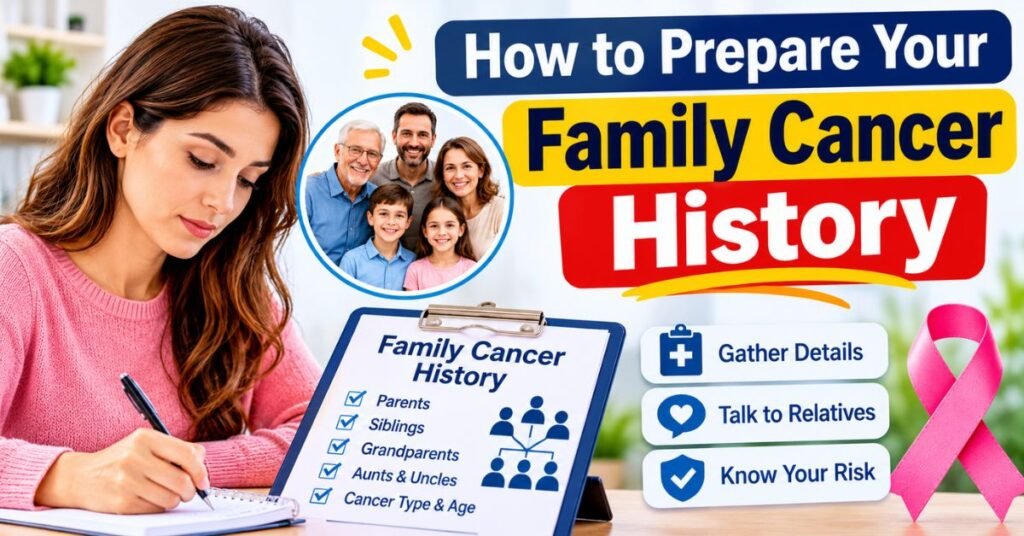
Good preparation sharpens any risk tool. Ask relatives on both sides about cancer. Note the type of cancer and the age at diagnosis. Check whether anyone had genetic testing. Bring copies of any results. Share what you know and mark what feels unsure.
Consider a short case study. Maria is 38. Her aunt had breast cancer at 45 on her father’s side. Maria’s mother never had cancer. Maria assumed she carried no risk. After a family chat she learned that two other relatives had ovarian cancer. This example is fictional. It shows how a fuller family medical history can change a doctor’s advice.
| Question to ask relatives | Why it matters |
| Who had cancer? | Shows how close the link is |
| Which cancer? | Breast and ovarian links matter most |
| What age at diagnosis? | Younger ages raise concern |
| Any genetic test? | Results guide next steps |
Why Does FRABOC Still Appear in Online Search Results?
Old pages never vanish. GP guides and referral forms still carry the name. Search engines keep showing them. This explains why people still ask about the tool in 2026.
Read old mentions with care. Treat the old numbers as history. Look for current guidance from health agencies instead. Also remember the travel meaning. A flight search for FRA-BOC means Frankfurt to Bocas del Toro.
See Also: GoGuardian: Features, Benefits, Pricing, and Complete Guide
Common Misconceptions About FRABOC
Several myths surround this tool. Some people think it was a cancer test. Others believe it’s still active. A few think a higher result means cancer. Each belief is false.
The table clears them up. Share it with anyone who feels worried after reading an old letter. Facts calm fears.
| Myth | Fact |
| FRABOC was a cancer test | It was a family risk tool |
| FRABOC is still active | Cancer Australia retired it |
| A high result means cancer | It signals higher chance only |
| Only the mother’s side counts | Both sides matter |
| Old percentages apply to me | Use current tools instead |
Frequently Asked Question
Quick answers help. This section covers the questions people ask most. Each answer stays short and direct.
For personal advice, talk with a doctor. They can weigh your full history. No article can replace that.
What Does FRABOC Stand For?
FRABOC stands for Familial Risk Assessment – Breast and Ovarian Cancer. It’s also written FRA-BOC. What does FRABOC mean in cancer assessment? It names an old tool that grouped family history into risk levels.
What Was FRABOC Mainly Used For?
Doctors used it to sort family history into risk groups. Results then guided referrals, counseling talks and screening conversations. It never diagnosed anything.
Is FRABOC Still Available Online?
No. Cancer Australia has removed it. Old copies may remain in archives. Don’t rely on them for decisions about your health.
Could FRABOC Diagnose Breast or Ovarian Cancer?
No. It couldn’t find or diagnose cancer. It only estimated family-linked risk. Diagnosis needs medical tests and a doctor’s review.
Was FRABOC a Genetic Testing Tool?
No. It reviewed family history and not DNA. Genetic tests read your genes. Doctors may suggest one after reviewing the family.
What Replaced FRABOC?
iPrevent took its place on the Cancer Australia website. CanRisk and IBIS are other models doctors use. Each gives a more personal estimate.
What Is the Difference Between FRABOC and iPrevent?
FRABOC used three broad groups. iPrevent adds personal factors and gives a tailored estimate. It also suggests ways to manage risk.
Does Breast Cancer in the Family Mean Someone Is High Risk?
Not necessarily. Risk depends on how many relatives had cancer and how close they are. Cancer type and age at diagnosis matter too. Most families with one case stay in lower groups.
Can Breast Cancer on the Father’s Side Increase Risk?
Yes. Gene changes pass through either parent. A father’s mother or sisters may offer clues. Include both sides when you share your history.
Can You Use iPrevent Without a Doctor?
Yes. Adults can complete it and download a report. A doctor should help explain the result. Skip it if you’ve had invasive breast cancer or DCIS.
When Should Someone Seek Genetic Counseling?
Consider it when several relatives had cancer or when diagnoses came young. Male breast cancer, cancer in both breasts or a known gene change also count. A doctor can advise.
Final Thoughts:
FRABOC helped doctors turn family stories into broad risk groups. It was never a cancer test or a genetic test. Cancer Australia has retired it. Its job now belongs to iPrevent, CanRisk and IBIS.
Your next step is simple. Gather your family history from both sides. Then talk with a qualified health professional. They can explain your result and your options.
Medical disclaimer: This article gives general information only. It isn’t medical advice. Historical FRABOC figures appear here to explain how the retired tool worked. Speak with a qualified health professional about your own family history and risk.

Arslan Rafi is a writer and language enthusiast who creates easy-to-understand content about slang, expressions, words, and their meanings. His work focuses on explaining regional and modern language in a clear, engaging way, helping readers understand how words and phrases are used in everyday conversation.