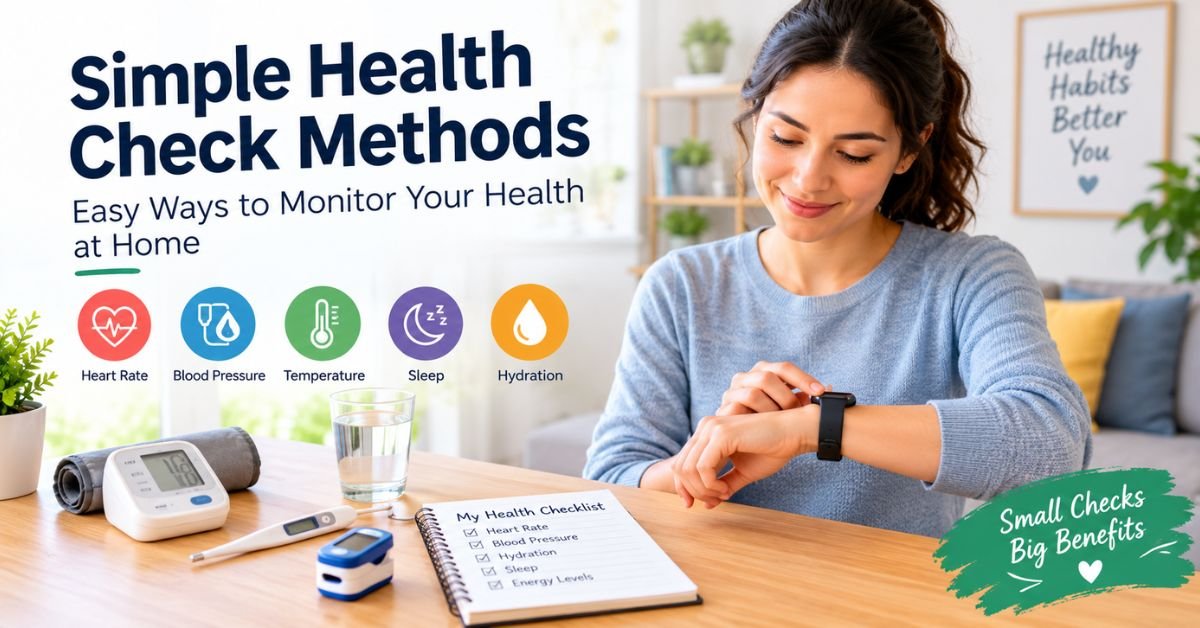
16:Simple Health Check Methods: Easy Ways to Monitor Your Health at Home
Your body talks to you all day. Most people just don’t listen. That’s where simple health check methods help. You don’t need fancy gear or a medical degree. You need steady habits and a little curiosity. This guide shows you easy ways to monitor your health naturally. You’ll learn how to check your health at home in about ten minutes a day. We cover vitals, hydration, sleep, digestion, mood, and more. Let’s dive in.
This article shares general information only. It doesn’t replace advice from a doctor.
Why Simple Health Check Methods Matter for Daily Wellness
Health problems rarely appear overnight. They build slowly. You feel a bit more tired. Sleep gets lighter. Digestion acts strange. Most people shrug these shifts off. However, simple health check methods turn vague feelings into clear notes.
Those notes help you spot trouble early. Home health monitoring also shows you what works for your own body.
Good everyday wellness checks bring real benefits. You catch early warning signs sooner. You also avoid needless panic because you know your usual pattern. The World Health Organization puts it well in its constitution.
“Health is a state of complete physical, mental and social well-being and not merely the absence of disease or infirmity.”
That idea fits daily wellness monitoring perfectly. Your health is more than a single number. The table below shows what personal health tracking gives you.
| Benefit | What It Means for You |
| Early detection | You notice small changes before they grow |
| Progress tracking | You see which habits help you |
| Less worry | You know your normal range |
| Better doctor visits | You bring facts instead of guesses |
How to Establish Your Personal Health Baseline
A baseline is your “normal.” Think of the dashboard in your car. You only know a light looks odd if you know how it usually looks. Health baseline measurements work the same way. Track your numbers for 7 to 14 days. Don’t change your routine during that time. This is the heart of how to establish a personal health baseline.
Keep the log simple. A health tracking journal or a phone app works fine. Rate your energy from 1 to 10 each morning. Say your average is 6. A sudden drop to 3 tells you something changed. This basic health assessment costs nothing and takes minutes. The table shows what to record.
| Metric | How to Measure | When |
| Resting heart rate | Count your pulse for 30 seconds and double it | Morning |
| Energy score | Rate 1 to 10 | Morning and evening |
| Sleep | Hours slept and how rested you feel | Each morning |
| Digestion | Note regularity and comfort | Evening |
| Weight | Step on the scale | Same time each week |
How to Monitor Vital Signs at Home
Your vitals work like dashboard lights. They show what happens inside your body. Vital signs monitoring covers pulse, breathing, temperature, and blood pressure. These are basic health measurements anyone can learn. You can follow how to monitor vital signs without a doctor with a few simple tools.
One rule matters most. Trends beat single readings. A stressful morning can push any number up for a day. Look for patterns across several days instead. This approach keeps monitoring health at home calm and useful. It also keeps you from chasing every small blip.
See Also: Why Does Ozdikenosis Kill You? The Truth About This Viral Disease Myth (2026 Guide)
Checking Your Resting Heart Rate
Here’s how to measure your resting heart rate. Sit quietly for five minutes. Place two fingers on your wrist or neck. Count the beats for 30 seconds and double the number. This pulse rate measurement works anywhere. Most adults land between 60 and 100 beats per minute. Fit people often sit lower. A resting heart rate that stays high for several days can point to stress, poor sleep, dehydration, or infection. For example, a jump from 72 to 92 deserves attention.
Monitoring Your Breathing Rate and Oxygen Levels
Your respiratory rate is easy to check. Sit still and count chest rises for 60 seconds. Adults usually take 12 to 20 breaths per minute at rest. Fast or shallow breathing may reflect stress or fatigue. A pulse oximeter measures blood oxygen saturation. Readings of 95% to 100% are typical. Cold fingers and nail polish can skew results. A steady low reading needs a doctor’s advice.
Understanding Changes in Body Temperature
Normal body temperature measurement averages 36.1°C to 37.2°C (97°F to 99°F). A fever usually starts at 38°C (100.4°F). Use the same home thermometer at the same time each day. That keeps your numbers fair. A small rise may signal an early infection. A fever that lingers needs medical care. Don’t guess about long-term low-grade temperatures. Ask a professional instead.
How to Check and Monitor Your Blood Pressure at Home
Blood pressure monitoring matters because it reflects heart health. Many people feel fine while their numbers creep up. That’s why how to check blood pressure at home is such a popular question. A digital blood pressure monitor makes it easy.
Choose a validated upper-arm model with the right cuff size. Wrist devices tend to be less reliable.
Preparation affects accuracy. Sit calmly for five minutes with your back supported. Keep your feet flat and your arm at heart level. Skip caffeine, exercise, and smoking for 30 minutes before. Take two readings a minute apart and log both.
The American Heart Association calls under 120/80 mmHg normal. Guidelines differ between countries. Follow the targets your own doctor sets.
| Category (AHA) | Reading (mmHg) | Suggested Action |
| Normal | Under 120 and under 80 | Keep up your habits |
| Elevated | 120 to 129 and under 80 | Review lifestyle |
| High, stage 1 | 130 to 139 or 80 to 89 | Talk to your doctor |
| High, stage 2 | 140+ or 90+ | See your doctor soon |
| Crisis | Above 180 and/or above 120 | Seek urgent care |
Tracking Body Weight and Measurement Changes
Weight shifts every day. Water, food, and hormones all play a part. That’s normal. So skip the daily panic. Body weight tracking works best with weekly averages. Weigh yourself at the same time under the same conditions. Then compare week to week. This gives you real insight into body health indicators.
Waist size adds another clue. The WHO uses cutoffs of 94 cm (37 in) for men and 80 cm (31.5 in) for women as increased risk. Risk becomes substantially higher at 102 cm (40 in) and 88 cm (35 in). These numbers vary by ethnicity. Treat them as guides rather than verdicts. The table shows how to read your trends.
| Type | What It Shows |
| Daily weight | Short-term fluctuation |
| Weekly average | Real progress |
| Monthly trend | Long-term health pattern |
Simple Health Checks for Hydration and Fluid Balance

Water affects focus, digestion, mood, and energy. Your hydration levels change with climate, activity, and body size. So a fixed rule rarely fits everyone. Many adults do well with roughly 2 to 3 litres (68 to 101 fl oz) of total fluid daily. Food supplies part of that. Learn how to recognize dehydration symptoms. Common ones include thirst, dry mouth, headaches, and dizziness.
Check in with your body through the day. Notice how you feel after a long walk or a hot afternoon. Drink before you get very thirsty. This habit belongs on any list of healthy lifestyle habits. Pair it with your daily health check routine so it sticks.
What Urine Color Can Tell You About Hydration
A urine color chart is one of the easiest natural ways to monitor health. Pale straw means you’re well hydrated. Dark yellow or amber means you should drink more. Vitamins, foods, and medicines can change the color. Red, brown, or persistently dark urine needs a doctor’s attention. Clear urine is usually fine. It simply means you drank a lot recently.
| Color | Likely Meaning |
| Pale straw | Well hydrated |
| Dark yellow | Drink more fluids |
| Amber | Likely dehydrated |
| Red or brown | See a doctor |
How to Track Sleep Quality and Patterns
How sleep affects overall health is a big topic. Sleep isn’t only about hours. It’s about depth and recovery too. Most adults need at least 7 hours a night according to the American Academy of Sleep Medicine. The CDC shares similar guidance. Sleep quality tracking helps you see what truly rests you.
Track four things each day. Note how long you take to fall asleep. Count night awakenings. Rate your morning alertness. Watch for daytime yawning. Consider Daniel, a made-up example. He slept eight hours but felt drained. His log showed late caffeine and screen time. He moved coffee to the morning. Within two weeks his mornings improved. Small notes revealed the cause.
Monitoring Digestive Health and Bowel Habits
Your gut reflects your inner health. Digestive health indicators include regular bowel movements and steady appetite. Normal frequency ranges from three times a day to three times a week. Persistent bloating isn’t normal. Here’s how to monitor digestive health naturally. Note your pattern each evening in your health tracking journal.
The Bristol Stool Chart helps you describe what you see. Types 3 and 4 are generally considered healthy. Watch for red flags. Blood in stool, black stool, and unexplained weight loss need a doctor. So do changes that last more than a few weeks. Don’t wait on these.
| Bristol Type | Description | Meaning |
| 1 to 2 | Hard and lumpy | Likely constipation |
| 3 to 4 | Smooth and soft | Healthy range |
| 5 to 7 | Soft to watery | Possible diarrhea |
Tracking Energy Levels and Daily Stamina
Energy is one of the clearest physical health indicators. Learn how to track your energy levels with a simple score. Rate yourself from 1 to 10 at set times. Maybe 8 a.m. and 4 p.m. Your daily energy levels should feel steady. Sudden crashes matter. So does slow recovery after activity.
Many things drain energy. Poor sleep, stress, low iron, and lifestyle imbalance top the list. Persistent fatigue deserves a medical check. Don’t just push through it. Treat your score as one of your health awareness tips. Over a month the pattern will tell a story.
What Your Skin, Hair, and Nails May Reveal About Your Health
Your appearance can hint at what’s inside. Skin health indicators include dryness and unusual color changes. Dry skin may reflect dehydration or nutrient gaps. Hair and nail health also offer clues. Thinning hair can relate to hormones or low iron. Brittle nails may point to a vitamin shortage.
These signs are clues rather than diagnoses. Many factors cause them. Review your diet and water intake first. Then book a checkup if changes are sudden or severe. This is a solid self-health assessment step. It keeps you aware without leaping to conclusions.
See Also: Droven.io Cloud Computing Guide 2026: Features, Benefits, Setup, and Security
Simple Mental Health Self-Checks to Practice Daily
Mind and body affect each other. A short mental health self-assessment each evening takes under a minute. Rate your mood from 1 to 10. Note your focus and motivation. Stress signs include constant worry, irritability, and poor concentration. Patterns appear quickly. This fits any personal wellness tracking plan.
Review your scores each week. Look for trends tied to sleep or workload. If low mood, anxiety, or hopelessness lasts for weeks, talk to a professional. You can also contact a local helpline. Asking for help is a strength. It’s part of preventive health practices.
Recognizing Subtle Changes in Your Body
Your body sends quiet warnings first. Signs of poor health to watch for include frequent headaches, muscle tension, sudden appetite shifts, and dizziness. These early warning signs are easy to ignore. Yet they often show up before bigger problems. Learn how to track daily health changes by noting what you feel and when.
Here’s an example. Repeated afternoon headaches may link to dehydration or screen fatigue. Write down the time and the trigger. Then test one fix at a time. Drink water at lunch. Take screen breaks. If the pattern persists, tell your doctor. Good notes make that visit far more useful. These are also signs of good physical health in reverse. Steady energy and calm digestion show things are going well.
How to Build a Simple Daily Health Monitoring Routine
Consistency beats complexity. A home wellness routine works only if you keep it up. So keep it short. The whole daily health check routine below takes under ten minutes. These are daily habits for better health awareness you can build in a week.
Anchor each check to something you already do. Check your pulse after brushing your teeth. Log your mood after dinner. Habit stacking makes this easy. Over time these everyday wellness checks feel automatic. Here’s the full plan in one table.
| Time | Checks |
| Morning | Pulse, water, energy score, sleep note |
| Midday | Fatigue, hydration, stretch, appetite |
| Evening | Digestion, mood rating, wind-down |
Morning Health Checks
Start with your resting heart rate before you get out of bed. Drink a glass of water next. Rate your energy and note how you slept. This takes about three minutes. It gives you a clear snapshot of how your body recovered overnight.
Midday Health Checks
Pause around lunch. Notice any fatigue or tension. Drink water and stretch for a minute. Watch your appetite too. Sudden hunger or no hunger at all can be a clue. Jot a quick line in your health tracking journal.
Evening Health Checks
Reflect on your digestion for the day. Rate your mood from 1 to 10. Then prepare for sleep with dim lights and no screens. Evening notes complete your daily wellness monitoring loop. They also set up tomorrow’s baseline.
Helpful Tools for Monitoring Your Health at Home
You don’t need many gadgets. A few reliable ones cover most tools for tracking health at home. Choose a home thermometer, a digital blood pressure monitor, a pulse oximeter, and a simple scale. Add a notebook or app. Wearable health devices like fitness bands can also log pulse and sleep. They’re handy but not perfect.
Buy validated devices from trusted brands. Replace batteries and follow the manual. Don’t check obsessively. Tools should support your personal health tracking. They shouldn’t run your day. The table summarizes what to look for.
See Also: Selena Green Vargas: Biography, Viral Mystery, and the Truth Behind the Controversy (2026)
| Tool | Purpose | What to Look For |
| Home thermometer | Detect fever | Fast and accurate |
| Digital blood pressure monitor | Heart health | Upper-arm, validated |
| Pulse oximeter | Oxygen tracking | Clear display |
| Smart scale | Weight trends | Consistent readings |
| Wearable health devices | Pulse and sleep | Comfortable fit |
| Notebook or app | Pattern tracking | Easy to use daily |
Common Mistakes to Avoid When Checking Your Health at Home
Learn the common mistakes in home health monitoring early. People often panic over one reading. Others check too often or ignore long-term trends. Some compare themselves with friends. Everyone’s body runs differently. Your own baseline is the only fair comparison.
Technique errors cause trouble too. A wrong cuff size gives false blood pressure numbers. Measuring right after coffee or exercise skews results. Remember that tracking should lower stress. If it raises your worry, step back for a few days. The table pairs each mistake with a better habit.
| Mistake | Better Habit |
| Panicking over one reading | Watch the trend over days |
| Over-checking vitals | Stick to set times |
| Wrong technique | Rest five minutes first |
| Comparing with others | Compare to your baseline |
When to Seek Medical Help for Warning Signs

Know when to seek medical attention. Some signs are urgent. Chest pain or pressure, severe shortness of breath, sudden confusion, fainting, and signs of stroke all need emergency care right away. A fever that stays high also needs help. Call your local emergency number. These numbers differ by country. Learn yours today.
Other signs matter too. Symptoms lasting several days need a visit. So do unexplained weight changes and persistent fatigue. Regular checkups are part of preventive healthcare. Your medical checkup frequency depends on age and risk. Ask your doctor what schedule fits you. The NHS offers helpful symptom guidance for many conditions.
Limitations of Home Health Monitoring
Know the limitations of self-health assessments. Home tracking can’t diagnose disease. It can’t replace blood tests. It also can’t catch every hidden condition. Some problems show no signs until late. That’s why when home health monitoring is not enough matters as a thought. If something feels wrong, trust that feeling and call a professional.
Think of it as an awareness system. It’s not a diagnosis tool. Share your logs with your doctor. Clear data leads to better conversations. Combined with screenings, these preventive health practices protect you well. Home checks and medical care work as a team.
Frequently Asked Questions
Readers often ask the same questions about health checks at home. This section answers them in plain words. Each answer is short and clear. Use them as quick reminders.
Remember that every body differs. Your doctor knows your history best. Use these answers as general guidance only.
What Are the Easiest Simple Health Check Methods to Use at Home?
The easiest simple health check methods at home for adults are tracking your pulse, hydration, sleep quality, and energy level. They need no medical equipment. You can do easy daily health checks without medical equipment in minutes. Start with these before adding tools.
Can Home Health Checks Replace Regular Doctor Visits?
No. Home checks build awareness. They don’t replace diagnosis or screening. Keep up with your regular medical checkup frequency. Use your logs to make those visits better.
How Often Should You Monitor Your Health at Home?
Check basic signals like energy and mood daily. Review weight and blood pressure weekly unless your doctor says otherwise. This answers how often to check your vital signs for most healthy adults. Avoid over-checking.
What Are the Early Warning Signs of Potential Health Problems?
Watch for ongoing fatigue, sleep changes, digestive shifts, mood changes, and unexplained weight loss or gain. Frequent headaches and dizziness count too. These early warning signs deserve a note in your journal. If they last, see a doctor.
Why Is Hydration Important for Overall Health?
Water supports brain function, digestion, circulation, and temperature control. Even mild dehydration can cause headaches and tiredness. Good hydration levels help you think and move better. Check your urine color daily.
Can Poor Sleep Affect Your Physical Health?
Yes. Poor sleep can weaken immunity and affect weight. It also strains the heart and dulls focus. Strong sleep quality tracking helps you fix the causes. Aim for consistent bed and wake times.
What Is a Normal Resting Heart Rate for Adults?
Most adults have a resting heart rate between 60 and 100 beats per minute. Fit people often sit lower. Know your own baseline. A lasting change from your normal deserves attention.
How Can You Improve Your Daily Health Monitoring Routine?
Start small. Track one or two metrics and keep them steady. Tie each check to an existing
Final Thoughts
Your health doesn’t need complexity. It needs attention. With simple health check methods, you build awareness step by step. You notice patterns early. You respond faster. You feel more in control. The goal isn’t perfection. The goal is steady awareness that works quietly in the background.
Start small today. Pick two metrics such as your resting heart rate and daily energy levels. Track them for one week. Then add sleep or hydration. These natural health monitoring methods grow with you. Your future self will thank you.

Arslan Rafi is a writer and language enthusiast who creates easy-to-understand content about slang, expressions, words, and their meanings. His work focuses on explaining regional and modern language in a clear, engaging way, helping readers understand how words and phrases are used in everyday conversation.